
Alternatives to CT Scans and MRIs: What Options Exist?
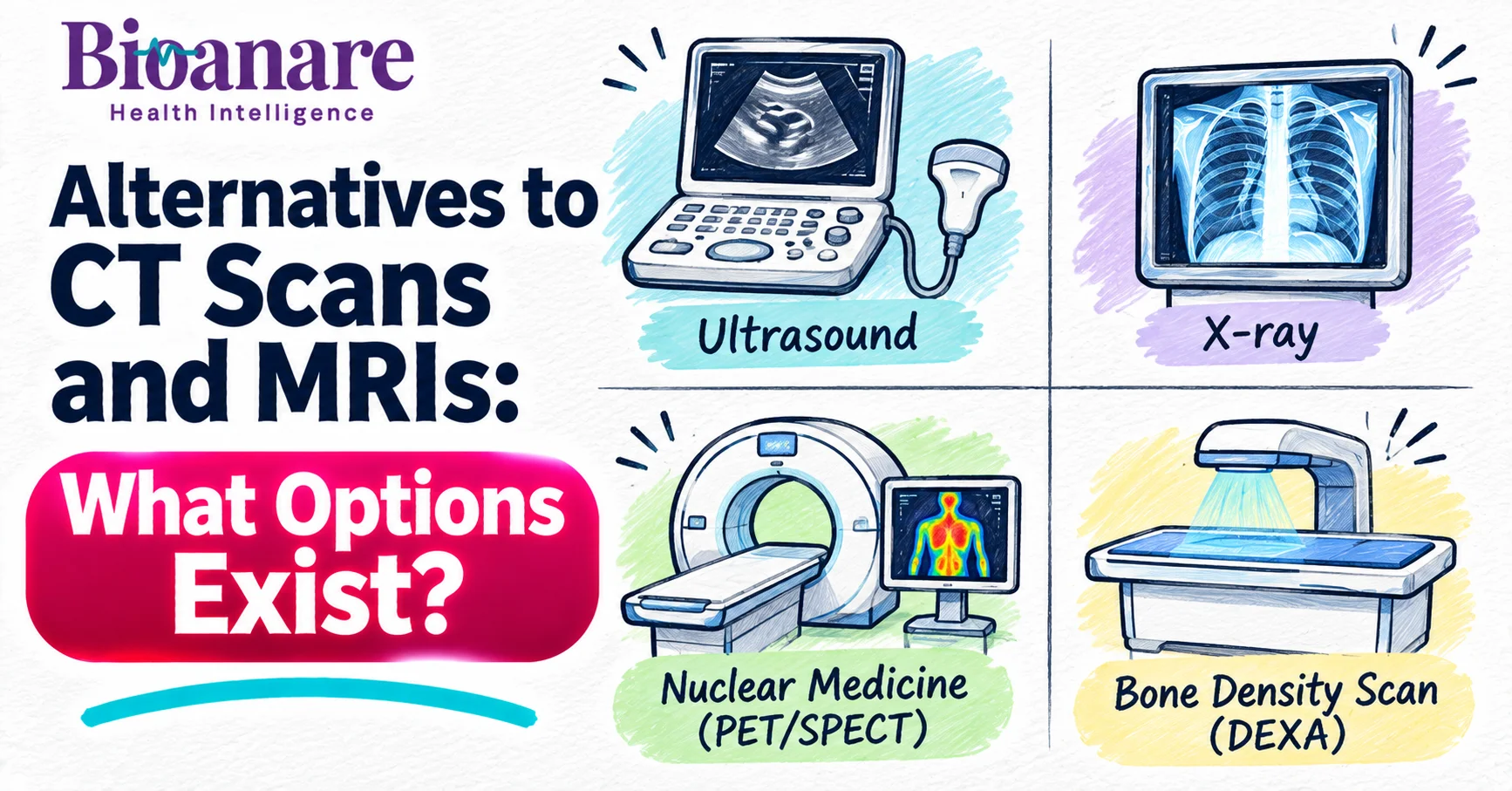
CT scans and MRIs are powerful diagnostic tools — but they're not always the first or only option. For many clinical questions, alternatives exist that involve less radiation, less cost, less time, or less anxiety.
Upload your blood test to Bioanare — free 7-day trial, no credit card required
Ultrasound — Underused and Underrated
Ultrasound uses sound waves — no radiation, no enclosed tube, real-time imaging, inexpensive, available in most clinics. It's the first-line imaging tool for: - Abdominal organs: liver, gallbladder, kidneys, spleen, pancreas - Pelvic organs: ovaries, uterus, bladder - Thyroid and neck lymph nodes - Vascular studies: deep vein thrombosis, carotid arteries - Musculoskeletal soft tissue injuries - Pregnancy monitoring
Limitations: doesn't penetrate bone or air well; operator-dependent; less detail for deep structures or obese patients.
X-Ray — Still Useful for the Right Questions
For bones, chest, and certain abdominal questions, plain X-ray provides quick, low-radiation answers that CT often confirms but rarely changes management on.
Functional Testing Instead of Imaging
Sometimes a blood test, nerve conduction study, or lung function test answers the clinical question better than any image: - Cardiac blood markers (troponin, BNP) can diagnose heart attack or failure without CT - Pulmonary function tests diagnose asthma and COPD without chest CT - Nerve conduction studies diagnose neuropathy without spinal MRI
When to Ask About Alternatives
- "Before ordering this CT, could ultrasound answer the question?"
- "Could we try blood tests or clinical observation before imaging?"
- "Is there a lower-radiation option that would still give you the information you need?"
Bioanare provides educational health information only. This is not a medical diagnosis. Always consult a qualified healthcare professional before making any health decisions.
← Back to all articles