
How Antibiotics Affect Your Gut and Immune System — And How to Recover
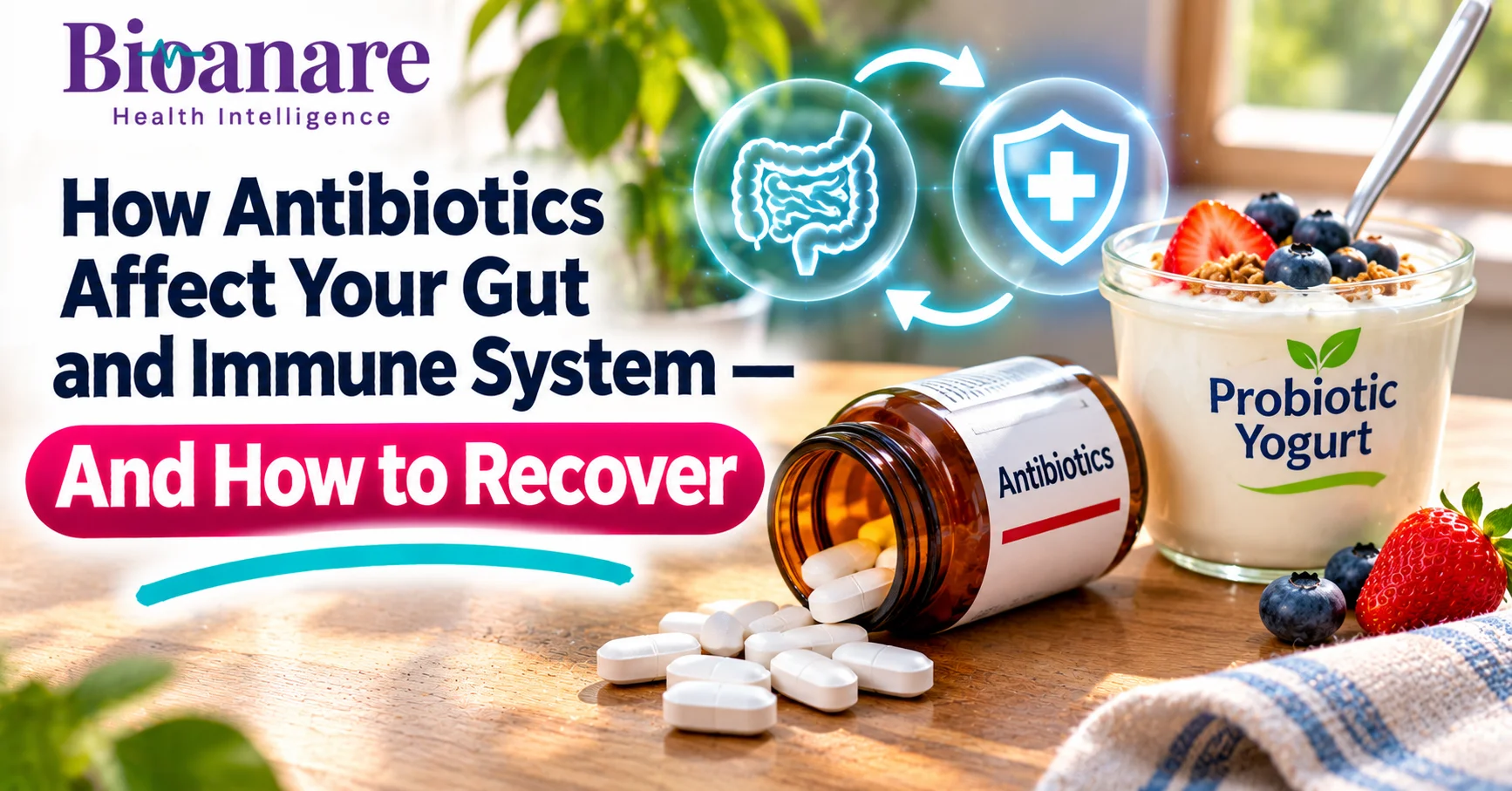
Antibiotics have saved hundreds of millions of lives. There's no question about that. But what most people aren't told when they leave the pharmacy is what happens to everything else in their gut while the antibiotic does its job.
Your gut contains approximately 38 trillion bacteria — a complex ecosystem called the microbiome. These bacteria are not passengers. They produce vitamins (B12, K2, short-chain fatty acids), train your immune system, regulate inflammation, produce neurotransmitters (about 95% of your serotonin is made in the gut), and protect against pathogenic bacteria by simply being there.
Upload your blood test to Bioanare — free 7-day trial, no credit card required
What Antibiotics Do to Your Gut
Antibiotics cannot distinguish between harmful bacteria and beneficial bacteria. A broad-spectrum antibiotic can wipe out 30–50% of gut bacterial diversity in a single course. Some species never fully recover.
Research has documented that gut microbiome disruption after a single course of antibiotics can persist for 6–24 months — and sometimes permanently reduces certain species.
The Immune Connection
70–80% of your immune system is located in your gut (gut-associated lymphoid tissue, GALT). When gut bacteria diversity drops: - Immune regulation is disrupted - Inflammatory signals increase - Risk of Clostridioides difficile (C. diff) infection increases dramatically - Susceptibility to opportunistic pathogens rises
Signs of Post-Antibiotic Gut Disruption
Diarrhea during or after antibiotic course, bloating and gas, altered bowel habits for weeks after finishing, fatigue, increased susceptibility to infections, oral thrush (Candida overgrowth), vaginal yeast infections in women.
How to Recover Your Gut After Antibiotics
Probiotics: Start during the antibiotic course (take at least 2 hours apart from the antibiotic). Continue for 4–8 weeks after. Best studied strains: Lactobacillus rhamnosus GG, Saccharomyces boulardii (a yeast, so not killed by antibiotics).
Fermented foods: Kefir, yogurt, sauerkraut, kimchi, miso, kombucha — start reintroducing once diarrhea resolves.
Prebiotic fiber: Feed the recovering bacteria — garlic, onions, leeks, oats, bananas, asparagus.
Avoid unnecessary antibiotics: The best protection is not taking antibiotics you don't need. Viral infections (colds, flu) don't respond to antibiotics.
Bioanare provides educational health information only. This is not a medical diagnosis. Always consult a qualified healthcare professional before making any health decisions.
← Back to all articles