
Foods That Should Never Be Eaten Together — And Why Your Stomach Pays the Price
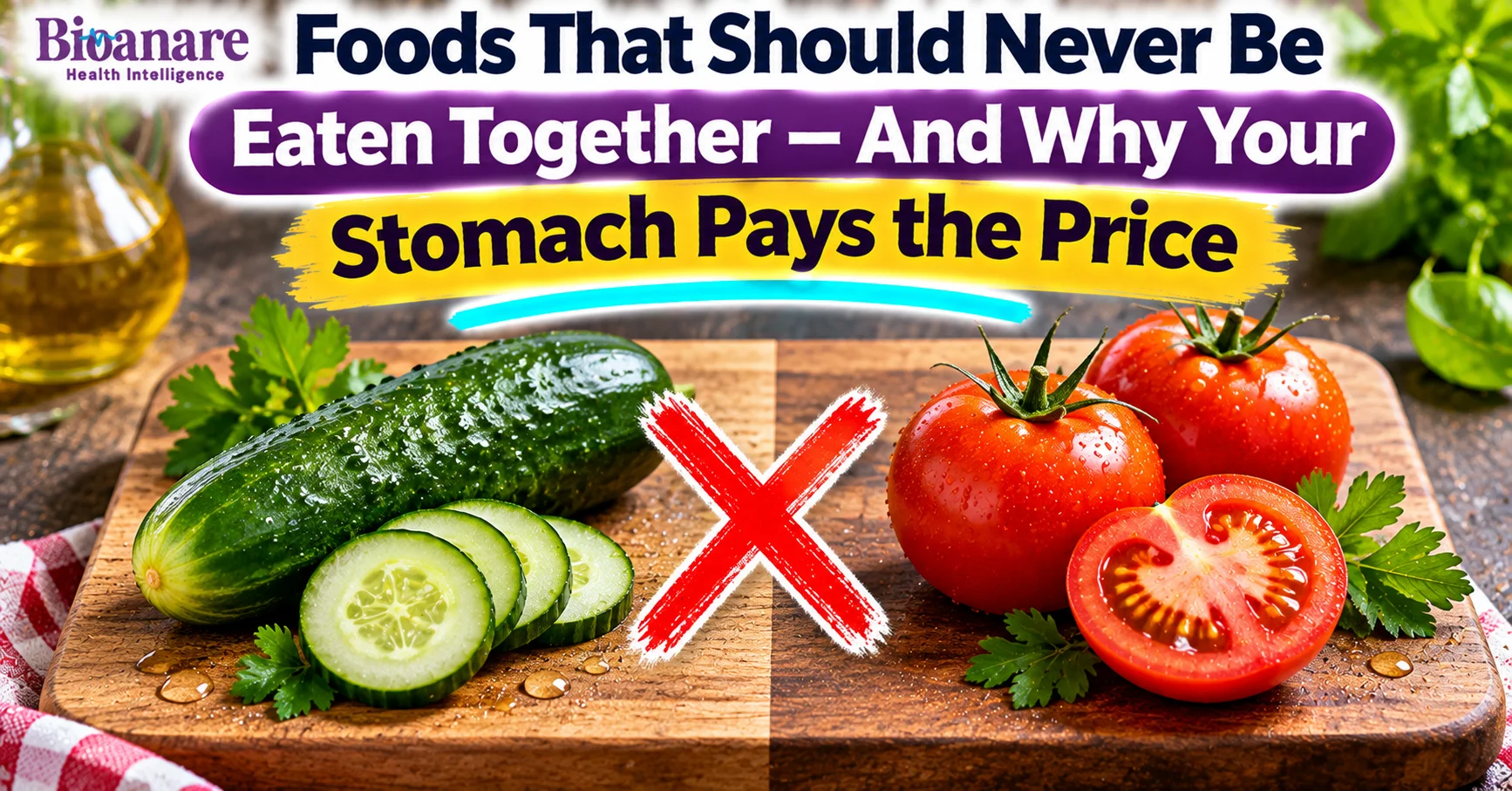
Your grandmother might have told you not to eat cucumber with tomato. Or not to drink cold water with a meal. Food combining rules have been practiced across cultures for centuries — in Ayurvedic medicine, in Soviet nutritional science, in traditional Mediterranean cooking. Modern nutrition is beginning to explain why some of these combinations create problems.
Upload your blood test to Bioanare — free 7-day trial, no credit card required
Cucumbers and Tomatoes — A Real Conflict
This is one of the most cited incompatible combinations in Eastern European and Ayurvedic food combining systems. The reason:
Cucumbers contain the enzyme ascorbate oxidase, which degrades vitamin C. Tomatoes are rich in vitamin C. When eaten together, the ascorbate oxidase from cucumbers begins to break down the vitamin C from the tomatoes before it can be absorbed. The nutritional synergy you expected becomes antagonism.
This doesn't make the combination toxic — but it significantly reduces the nutritional value of both foods when combined.
Starch and Protein — Why Rice and Meat Is Problematic
Starchy carbohydrates (rice, potatoes, bread, pasta) digest in an alkaline environment, using enzymes called amylases that work best at higher pH.
Protein (meat, fish, legumes, eggs) digests in a highly acidic environment, using proteases like pepsin that require low pH (high acid).
When you eat starch and concentrated protein together, the digestive signals compete. The stomach receives signals for both acid (for protein) and alkaline (for starch) simultaneously. Neither digestive process is optimal. The result: slower digestion, more fermentation by gut bacteria (producing gas and bloating), and potentially less efficient protein and starch digestion.
This is the basis of food combining theory — widely dismissed by mainstream nutritionists but increasingly supported by research on digestive enzyme efficiency and gut microbiome responses to different meal compositions.
Fruit After a Meal — Why Timing Matters
Fruit digests very quickly — simple sugars pass through the stomach in 20–30 minutes when eaten alone. When eaten after a heavy meal, fruit is held in the stomach with everything else, sitting at warm temperature as other foods slowly digest. The sugars begin to ferment.
This is why fruit after a heavy meal commonly causes bloating and gas in many people — the fruit has nowhere to go.
Eat fruit alone, 30 minutes before a meal, or as a snack between meals.
Dairy and Meat Together
Dairy and meat both require highly acidic protein digestion. By themselves, each is fine. Together, the protein load is significantly higher, requiring larger amounts of acid and digestive enzymes, and creating a heavier digestive burden. For people with impaired digestion, this combination is particularly difficult.
Cold Drinks With a Meal
Traditional medicine in multiple cultures — Ayurvedic, Traditional Chinese, and Soviet — advises against cold drinks with meals. The reasoning: cold liquids cool the stomach, reducing the temperature of digestive enzymes and the acid environment needed for efficient protein digestion. Room temperature water or warm drinks are preferred during meals.
Milk and Citrus
Citric acid from citrus causes milk proteins to curdle. This is essentially the same process as cheese-making. The resulting lumps are harder to digest than either milk or citrus eaten separately.
Practical Eating Principles From Food Combining
You don't have to follow strict food combining rules. But being aware of these principles and making moderate adjustments can reduce bloating, improve digestion, and increase nutrient absorption: - Eat fruit alone or before meals - Pair protein with vegetables rather than starch when possible - Separate high-starch meals from high-protein meals where practical - Avoid eating cucumber and tomato together in a salad — or eat them in sequence, not together - Drink room-temperature water with meals rather than ice cold
Bioanare provides educational health information only. This is not a medical diagnosis. Always consult a qualified healthcare professional before making any health decisions.
← Back to all articles