
How to Check If Eggs Are Still Fresh: The Water Test and More
Eggs are one of the foods where freshness genuinely matters for both safety and quality. The good news: there are simple, reliable ways to test them at home.
Upload your blood test to Bioanare — free 7-day trial, no credit card required
The Water Float Test — The Classic Method
Fill a deep bowl or glass with cold water. Gently lower the egg in.
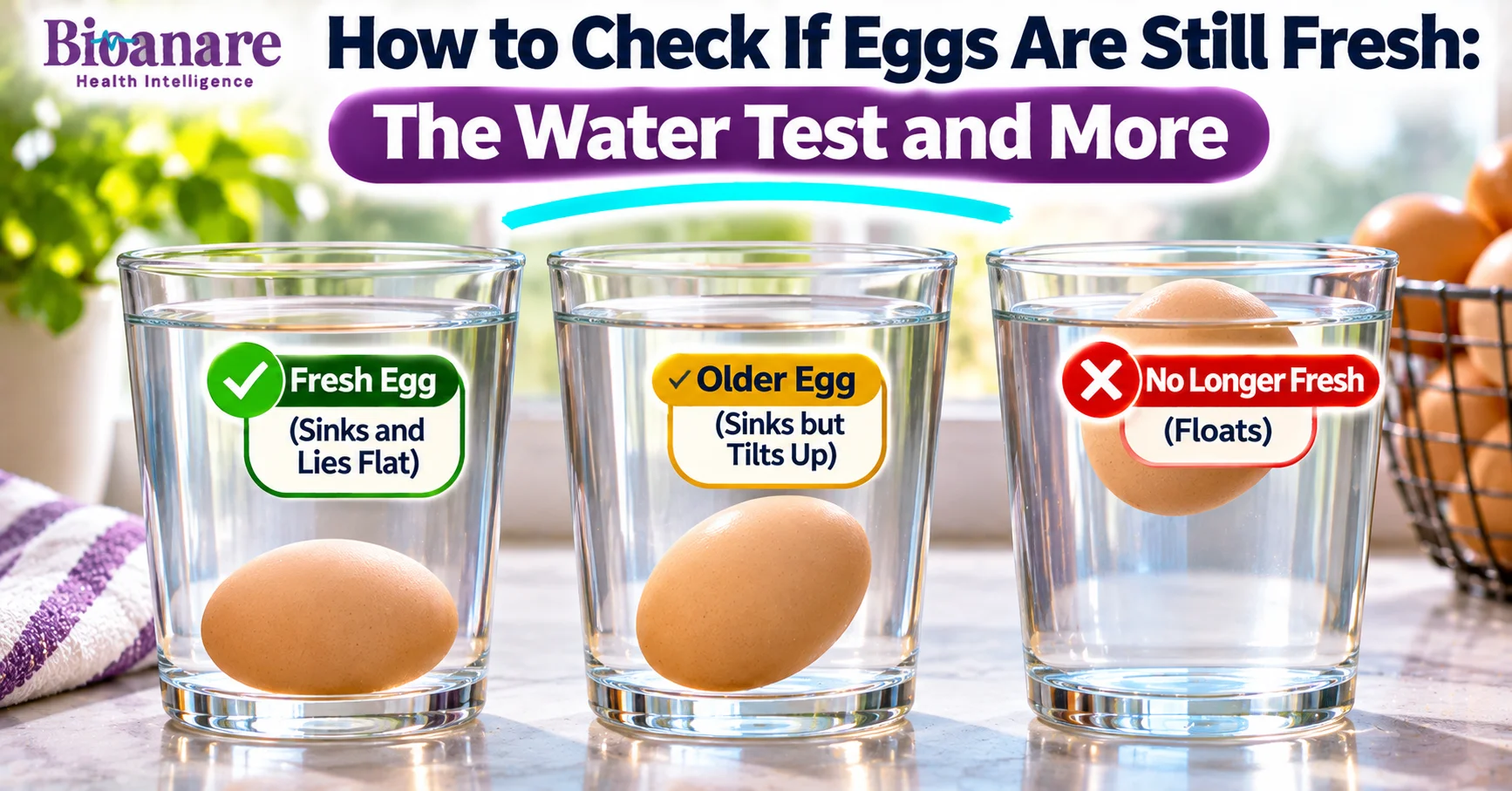
Sinks to the bottom and lays flat: Very fresh. The air cell inside the egg (which forms at the blunt end) is very small. Ideal for poaching or soft-boiling.
Sinks but stands upright on the bottom: About 1–2 weeks old. Still perfectly good to eat. Best for hard-boiling, scrambling, or baking.
Floats to the surface: The egg has aged significantly. The air cell has expanded as moisture evaporates through the shell and the contents shrink. A floating egg should not be eaten — the risk of Salmonella contamination is significantly elevated in older eggs.
Tilts at an angle, partially upright: About 2–3 weeks old. Still edible but should be used soon.
The Candle Test (Candling)
Hold the egg up to a bright light source in a dark room. Fresh eggs will appear mostly dense and solid. Older eggs show a large air cell visible at the blunt end, and you may see the yolk moving freely from the center when you rotate the egg (the chalazae — the protein strands that hold the yolk centered — have broken down).
The Shake Test
Hold the egg near your ear and shake it gently. A very fresh egg produces no sound — the contents fill the shell completely. An old egg sloshes noticeably — the contents have shrunk away from the shell.
The Crack Test
When you crack a fresh egg, the yolk stands up high and round, and the white has two distinct layers — a thick layer surrounding the yolk and a thin, watery outer layer. An older egg has a flat, spreading yolk that breaks easily and whites that are entirely watery.
Sell-By vs Best-Before vs Use-By
Sell-by dates are for retailers, not consumers. Eggs are typically safe to eat 3–5 weeks after the sell-by date if refrigerated. Best-before is a quality date. Use-by is a safety date — treat it seriously.
Bioanare provides educational health information only. This is not a medical diagnosis. Always consult a qualified healthcare professional before making any health decisions.
← Back to all articles