
How to Check If Meat Is Fresh Before You Buy It
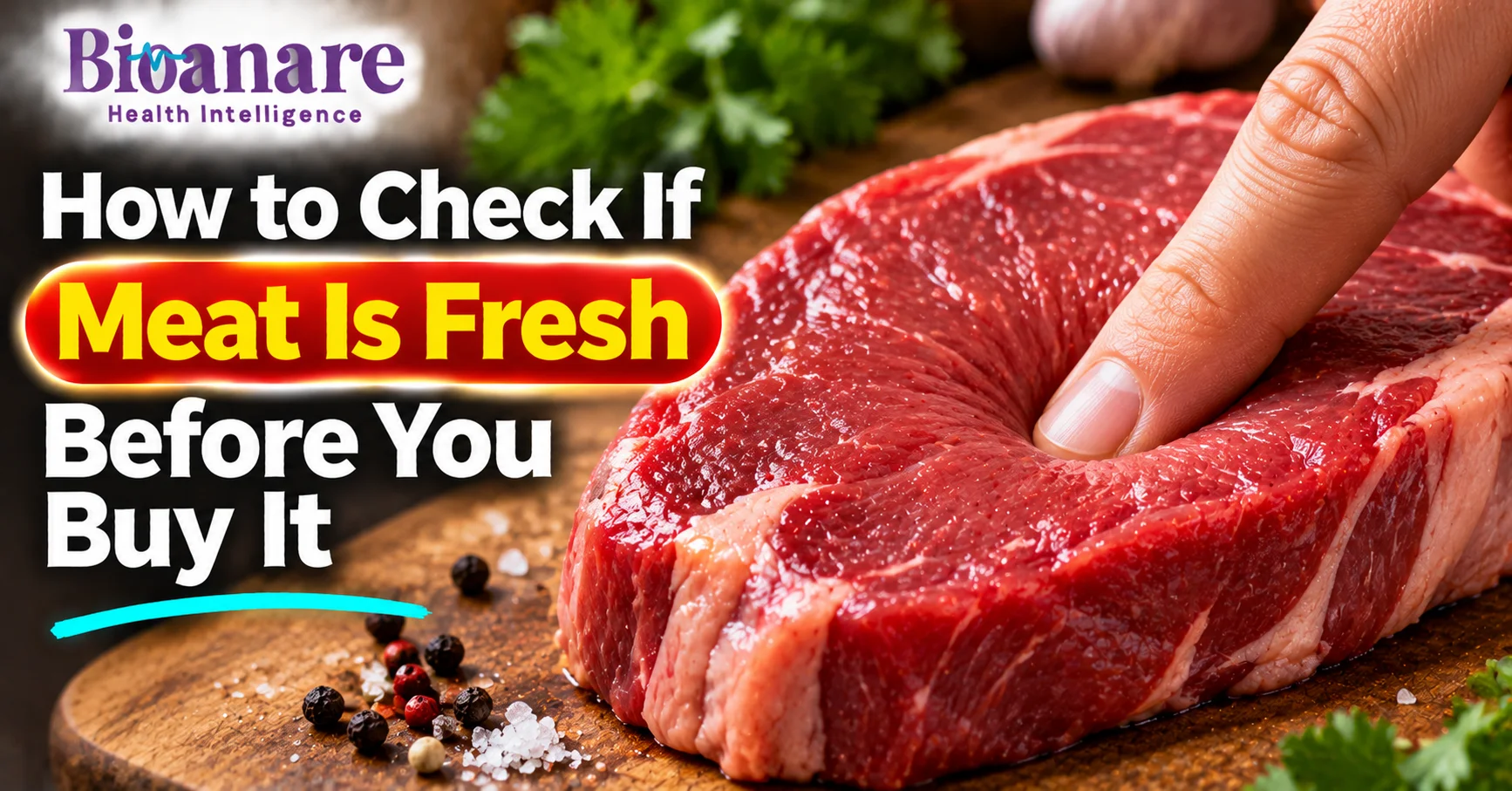
Meat packaging dates can be misleading, and the appearance of meat is managed by suppliers to look its best under store lighting. Here's how to tell whether meat is genuinely fresh — before you buy it.
Upload your blood test to Bioanare — free 7-day trial, no credit card required
The Finger Press Test (The Most Reliable Check)
Press a finger firmly into the meat and release quickly. Watch what happens:
Fresh meat: Springs back immediately and completely. The muscle fibers are still elastic and structurally intact.
Aging or deteriorating meat: Leaves an indentation that either recovers slowly or stays down. The proteins are breaking down, the fibers have lost their elasticity.
This test works for beef, pork, lamb, and poultry.
Color
Beef: Fresh beef is bright cherry red when first cut, due to myoglobin reacting with oxygen. It naturally turns darker purple-brown on the outside when exposed to air for 30+ minutes — this is not spoilage. However, uniform grey-brown throughout, or patches of grey-green, indicates spoilage.
Pork: Should be pale pink to slightly reddish, slightly moist. Grey patches or brown edges that are not from cooking indicate age.
Chicken and turkey: Should be pink to pale peach. Any grey tones, yellowing of skin that isn't from fat, or dark patches in breast meat indicate freshness issues.
Lamb: Deep red to dark red, similar to beef.
Smell
This is the most reliable indicator of spoilage but requires getting close — something stores don't make easy. Fresh meat has a neutral or very mildly meaty smell. Any sour, ammonia-like, sulphurous, or distinctly "off" odor means it has started to spoil.
Surface Texture
Fresh meat has a slightly moist surface that is not slimy. A slimy surface — a thin film that makes the meat feel slippery — is bacterial biofilm forming on the surface and indicates significant bacterial activity.
Packaging
Avoid packages where the liquid in the packaging is pink-red and abundant (indicates significant fluid loss = age), where the packaging is bloated (indicates gas from bacterial activity), or where the meat is pressed against the packaging in a way that obscures examination.
Bioanare provides educational health information only. This is not a medical diagnosis. Always consult a qualified healthcare professional before making any health decisions.
← Back to all articles