
How to Read a CT Scan Report
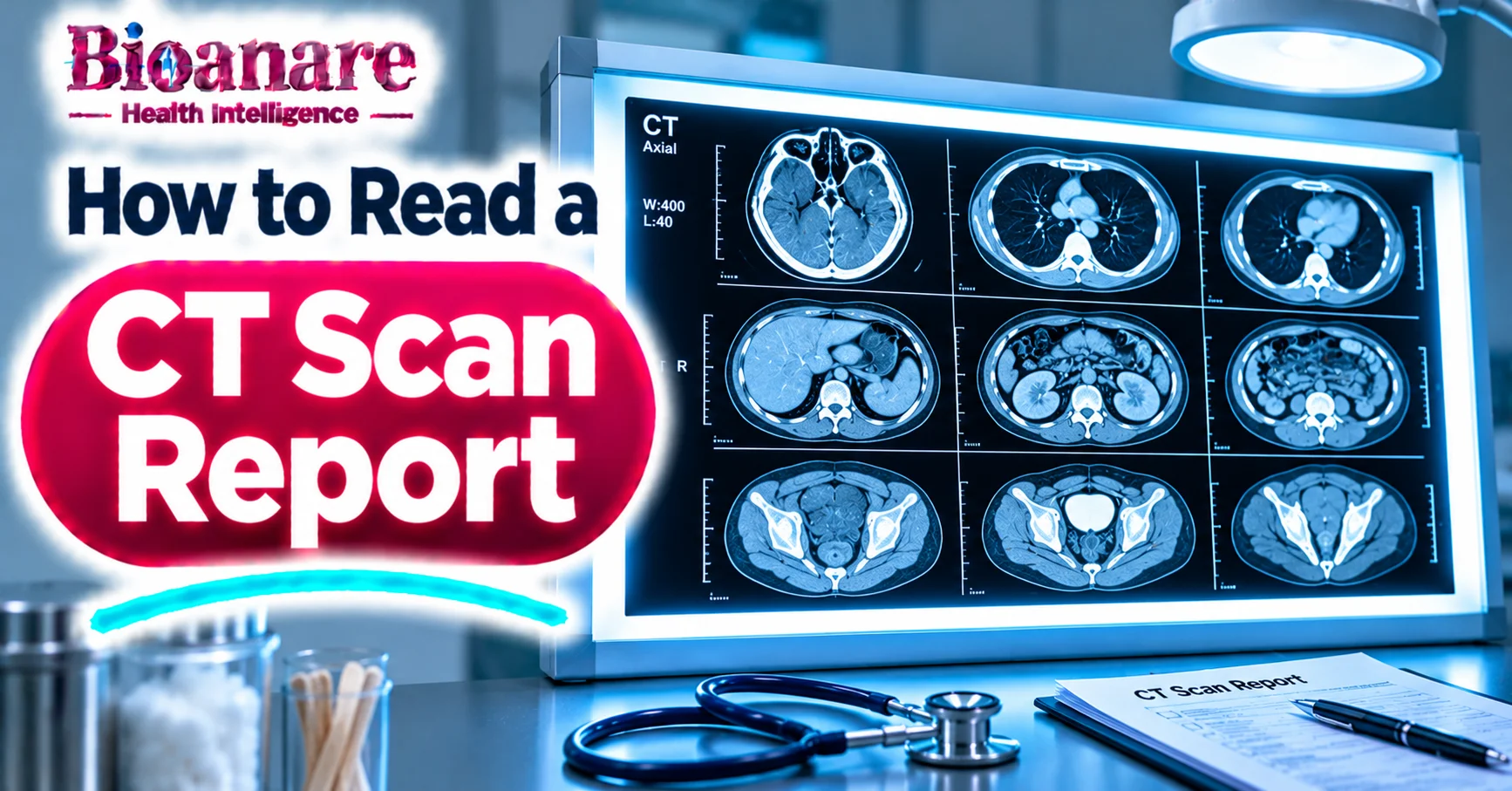
CT (computed tomography) scans give detailed cross-sectional images of the body. The reports are thorough and filled with terminology — here's how to understand what you're reading.
Upload your blood test to Bioanare — free 7-day trial, no credit card required
CT Report Structure
Indication: Why the CT was done. Technique: Whether contrast dye was used (contrast helps distinguish vessels and enhances certain masses), and which body region was scanned. Findings: Organ-by-organ description of what was seen. Impression: The key conclusions — the most clinically important section.
Common CT Terms
Attenuation: How bright or dark tissue appears — measured in Hounsfield Units (HU). Water = 0 HU, bone = 1000+ HU, fat = negative HU. Used to characterize lesions.
Hypodense / Hypodense lesion: Appears darker than surrounding tissue — often fluid, fat, or necrotic tissue.
Hyperdense: Brighter than surrounding tissue — often blood, calcium, or dense tissue.
Enhancing lesion: An area that becomes brighter after contrast injection — indicates blood supply, relevant for characterizing tumors.
Ground-glass opacity: Hazy area in the lungs — common in COVID-19 pneumonia, interstitial lung disease. Not always serious.
Lymphadenopathy: Enlarged lymph nodes.
No acute intra-abdominal pathology: Normal abdominal CT — good result.
Incidental finding: Something found that wasn't what was being looked for — often benign but noted for follow-up.
Bioanare provides educational health information only. This is not a medical diagnosis. Always consult a qualified healthcare professional before making any health decisions.
← Back to all articles