
How Do You Read a Hormone Panel?
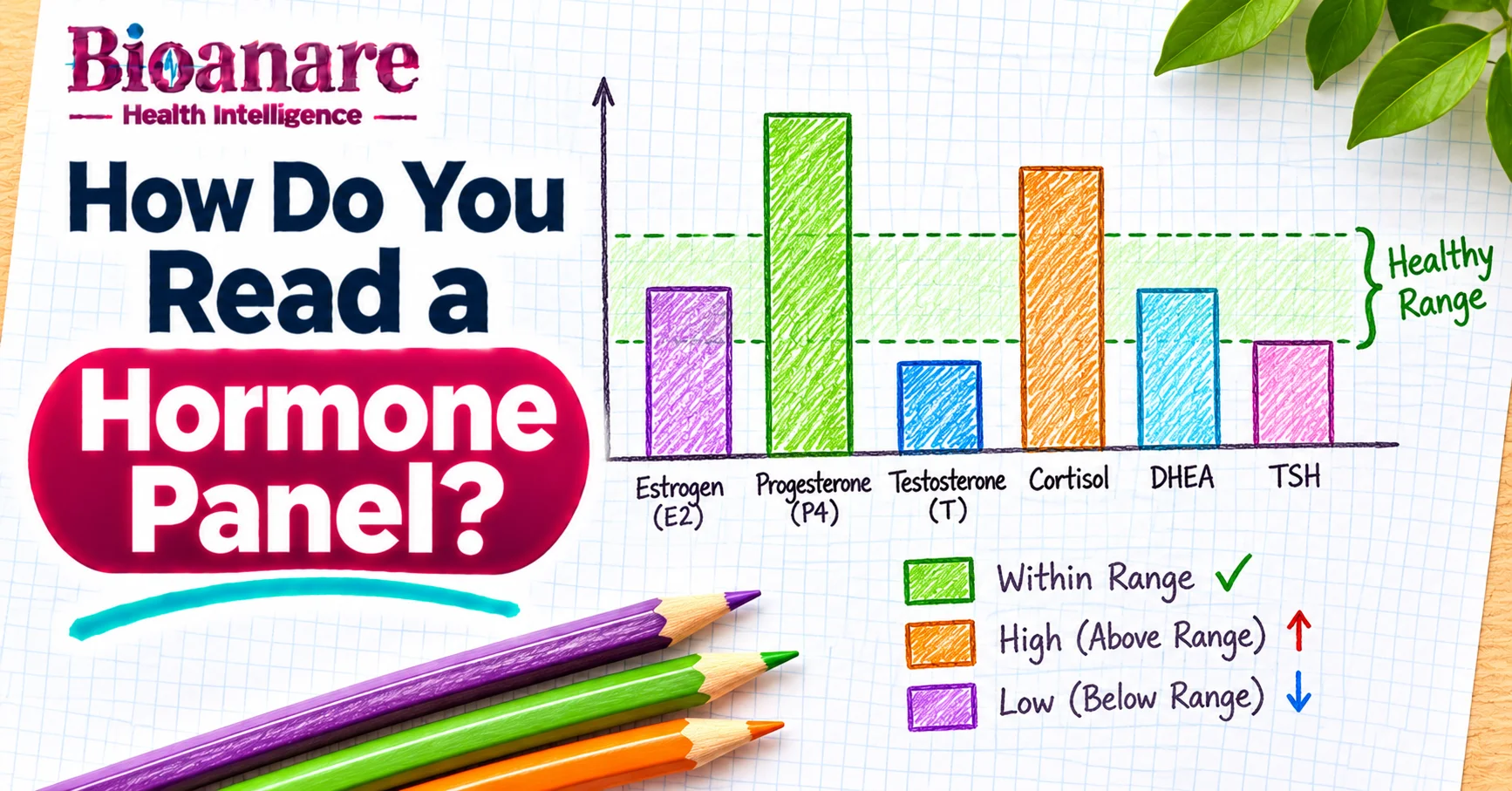
A hormone panel can feel like alphabet soup — TSH, LH, FSH, DHEA-S, E2, free T, SHBG. Here's how to make sense of it.
Upload your blood test to Bioanare — free 7-day trial, no credit card required
Sex Hormones
LH (Luteinizing Hormone): Signals ovaries to ovulate (women) or testes to produce testosterone (men). High LH with low sex hormones = primary gonadal failure. Low LH with low sex hormones = pituitary problem.
FSH (Follicle-Stimulating Hormone): Stimulates egg development (women) and sperm production (men). High FSH in women = ovarian reserve declining (perimenopause signal).
Estradiol (E2): Primary estrogen. Varies dramatically through the menstrual cycle. Measure on day 3 of the cycle for baseline assessment.
Progesterone: Peaks in the second half of the menstrual cycle. Low mid-luteal progesterone can indicate anovulatory cycles.
Total and Free Testosterone: Total includes bound and unbound; free testosterone is what's biologically active.
DHEA-S: Adrenal androgen. Declines with age. High in PCOS and some adrenal disorders.
Adrenal Hormones
Cortisol: Follow the daily pattern — test in the morning for meaningful results.
DHEA-S: Counterbalances cortisol. Low DHEA-S with high cortisol = adrenal fatigue pattern.
Interpreting Results in Context
No hormone result makes sense alone. A "normal" result for one person may be low-normal for another. Symptoms matter as much as numbers.
Bioanare provides educational health information only. This is not a medical diagnosis. Always consult a qualified healthcare professional before making any health decisions.
← Back to all articles