
Insects in Your Food? The Truth About Cricket Protein and Insect Flour
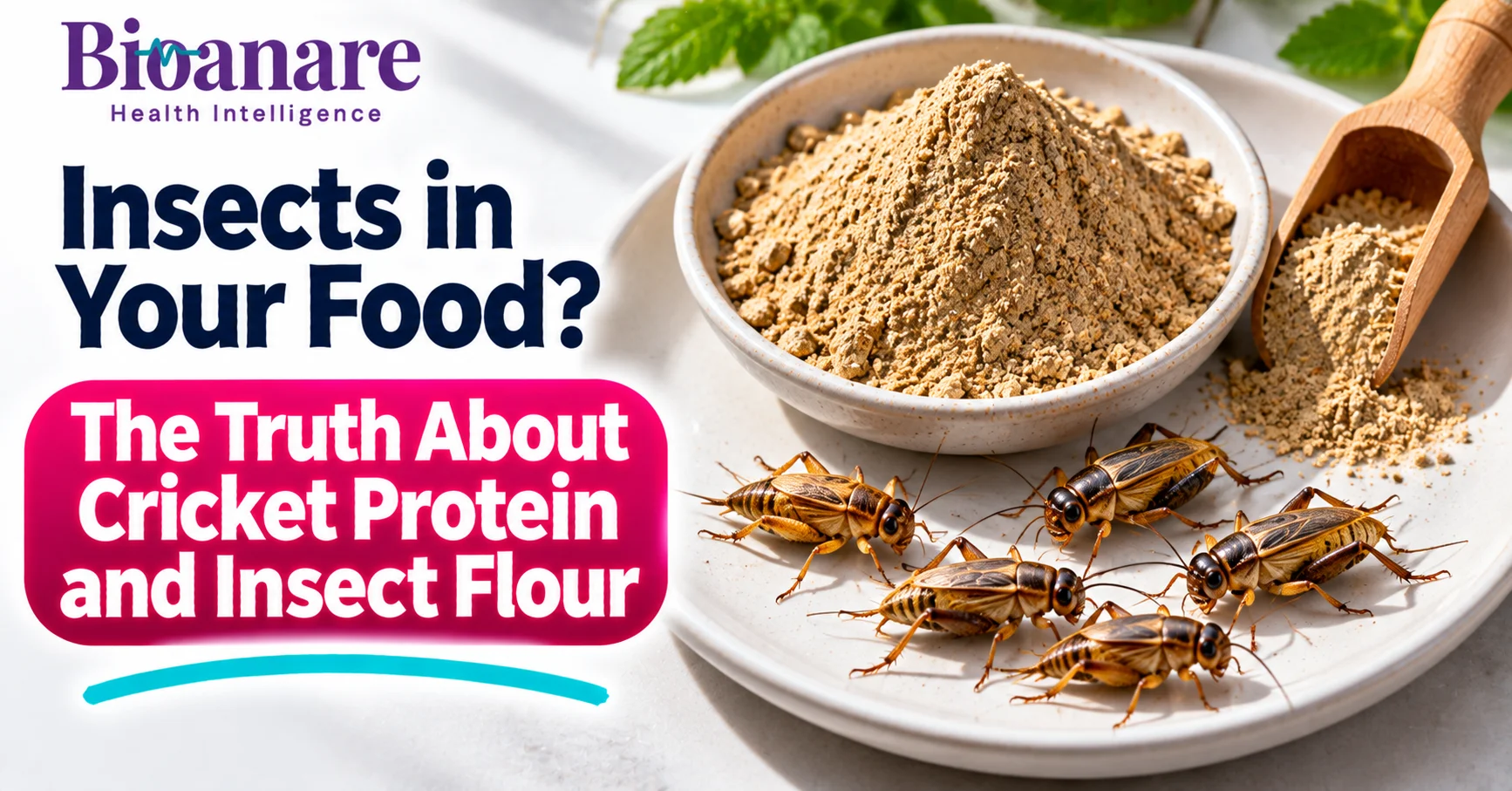
You're reading a protein bar label. It says "cricket flour" or "insect protein." Or maybe you're buying regular flour in a European supermarket and the ingredients list something you didn't expect.
This is real. And it's expanding.
Upload your blood test to Bioanare — free 7-day trial, no credit card required
What Is Cricket Flour?
Cricket flour (also called cricket powder) is made from dried, roasted crickets ground into a fine powder. It's approximately 65% protein by dry weight, contains all essential amino acids, B12, iron, zinc, and omega-3 fatty acids.
Proponents position it as sustainable protein — crickets produce 80% less methane than cattle, require 12× less feed per kilogram of protein, and use a fraction of the land and water.
Where Is It Being Used?
In North America and Europe, cricket flour appears in: - Protein bars and energy bars - Protein powders and supplements - Some crackers and snack foods - Pasta (in some European markets) - In 2023, the European Union approved several insect species for use as food ingredients: house crickets, yellow mealworms, migratory locusts, and lesser mealworms
Labeling — Are You Always Told?
In the EU, insect ingredients must be declared on food labels when present. In Canada and the US, labeling rules are still evolving.
Allergy Concerns
People with shellfish allergies (shrimp, lobster, crab) often also react to insects — they share similar proteins (tropomyosin). Anyone with a shellfish allergy should be particularly careful.
What You Can Do
- Read labels — insect ingredients must be listed in jurisdictions where they're approved
- Look for specific words: cricket flour, cricket powder, insect protein, yellow mealworm powder, lesser mealworm powder, locust powder
- Choose products that clearly state their protein sources
Bioanare provides educational health information only. This is not a medical diagnosis. Always consult a qualified healthcare professional before making any health decisions.
← Back to all articles