
Cage Free, Free Range, Organic, Pasture Raised — What Do Chicken Labels Actually Mean?
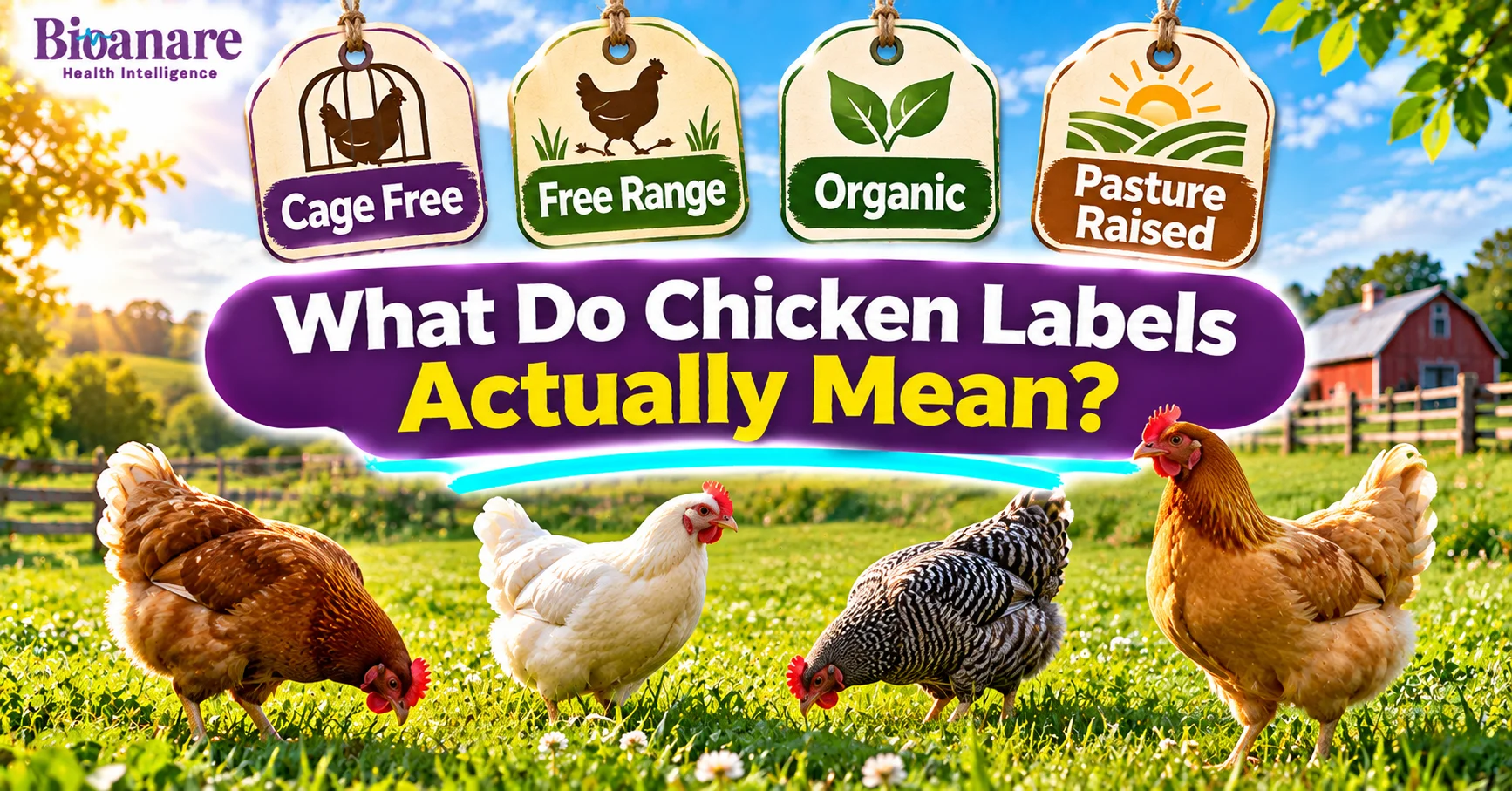
You're standing in the grocery store aisle. Four different egg cartons, four different claims, four different prices. Cage Free. Free Range. Organic. Pasture Raised. They all sound better than "regular." But what do they actually mean?
The marketing and the reality are not always the same thing. Here's what each label legally guarantees — in the US and Canada — and what it doesn't.
Upload your blood test to Bioanare — free 7-day trial, no credit card required
Cage Free
What it means: Chickens are not kept in battery cages (the small individual wire cages used in conventional egg production). They live in a shared space.
What it doesn't mean: Outdoor access. Cage free chickens are typically housed in large barns — sometimes with tens of thousands of birds per building. No natural light is required. No access to pasture, soil, or sunlight.
Free Range
What it means (US): The USDA requires only that chickens have "access" to the outdoors. That access can be a small door to a small concrete area, opened for a brief period each day. Most birds in free range facilities never actually go outside.
What it doesn't mean: Meaningful outdoor time, grass, insects, or sunlight. The word "range" implies something it legally doesn't deliver.
In Canada: "Free run" (comparable to US cage free — no outdoor requirement). "Free range" in Canada requires some outdoor access but standards vary by province.
Organic
What it means: Certified organic chickens must be fed 100% organic feed (no synthetic pesticides, no GMO feed). They must have access to the outdoors (by USDA organic standards). No antibiotics are permitted.
What it doesn't mean: Pasture, genuine outdoor time, insects, or sunlight. The outdoor requirement is minimal and enforced inconsistently.
The nutritional difference: Organic guarantees what goes into the feed — not how the chicken lives. The nutrient profile of organic eggs is not significantly different from conventional unless the bird has actual outdoor access.
Pasture Raised
What it means: This is the most meaningful label. Pasture raised chickens spend the majority of their lives on actual pasture — grass, insects, natural food sources. The standard established by Humane Farm Animal Care (HFAC) for the "Certified Humane Pasture Raised" label requires 108 square feet of outdoor space per bird (compare to free range, which can be as little as 2 square feet per bird outdoors — if outdoors at all).
What it means nutritionally: This is the bird eating as chickens actually evolved to eat — insects, grass, seeds, worms. This diet produces the nutritional differences documented in independent studies: 2× more vitamin E, 3× more vitamin A, higher omega-3s, more vitamin D (from sunlight).
The price: Pasture raised eggs cost more. This reflects genuine differences in production — lower stocking density, real land use, more complex management. The cost per egg is a few cents more than conventional.
What to Look For
- Best option: Certified Humane Pasture Raised, Animal Welfare Approved
- Second best: Certified Organic + local farm where you can verify conditions
- Local farmers' market eggs from known farms: Often better than any supermarket label
- Budget option: Know that any of the labels above conventional represents some improvement in animal welfare, even if the nutritional differences are modest
Bioanare provides educational health information only. This is not a medical diagnosis. Always consult a qualified healthcare professional before making any health decisions.
← Back to all articles