
Modified Food Ingredients: What They Are and What Research Says
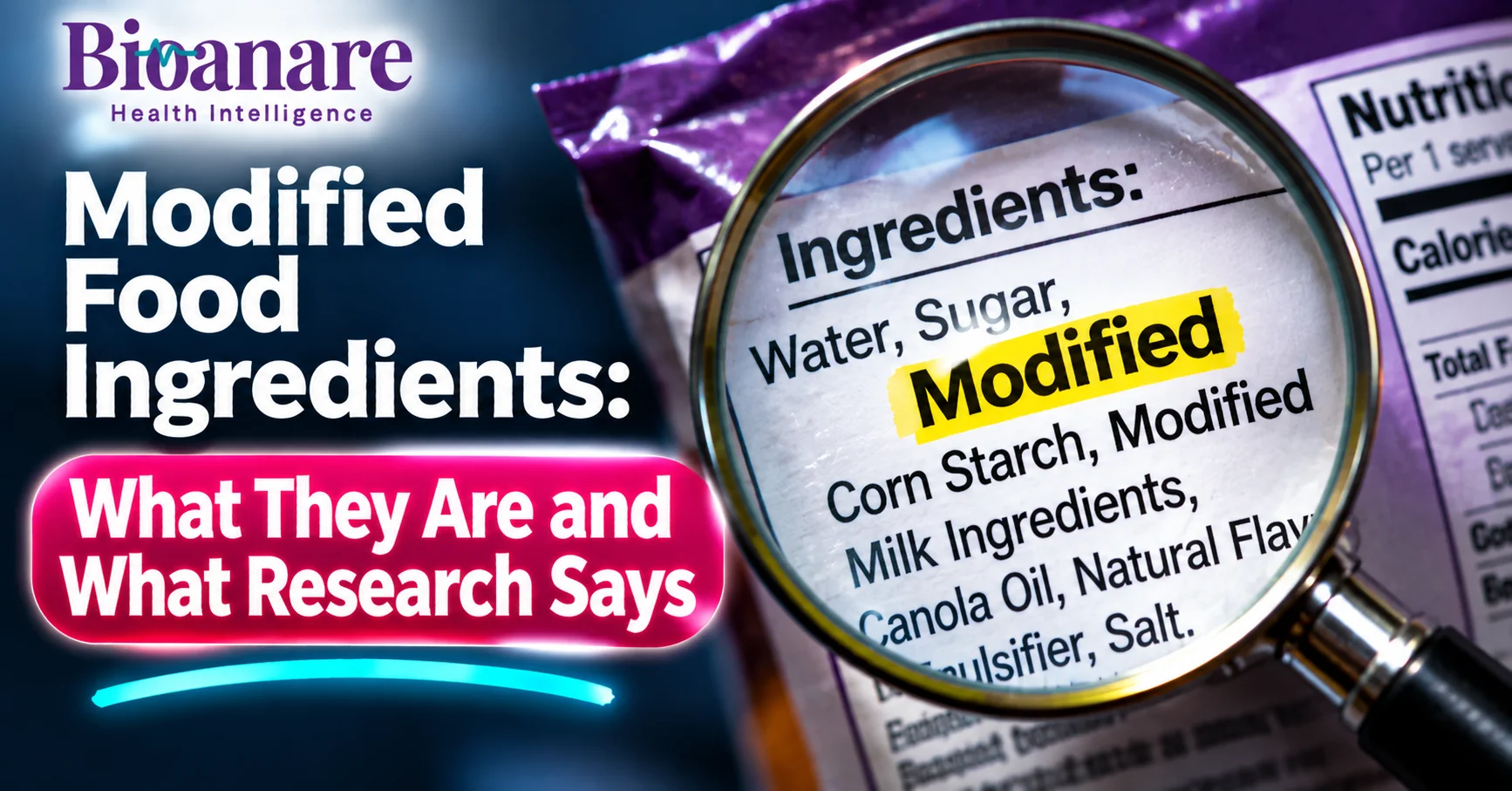
Pick up almost any processed food — soup, sauce, salad dressing, baby food, deli meat — and you'll likely find "modified corn starch" or "modified food starch" on the ingredient list. What does "modified" actually mean?
Upload your blood test to Bioanare — free 7-day trial, no credit card required
What Does "Modified" Mean?
In food science, "modified" doesn't mean genetically modified. It means the starch has been physically or chemically treated to change its functional properties — usually to make it more stable, improve texture, resist breakdown at high temperatures, or modify how it thickens.
Methods of modification include: - Physical modification: heat treatment, moisture manipulation - Chemical modification: cross-linking with chemicals (like phosphate or acetate), oxidation, esterification - Enzymatic modification: treated with enzymes to change molecular structure
Why It's Used
Modified starches are incredibly useful for food manufacturers: - Freeze-thaw stability (important for frozen foods) - Heat resistance (sauces that don't break down) - Consistent texture across different production batches - Extended shelf life
What Research Shows
Most regulatory agencies classify approved modified food starches as safe. However, some specific modifications and chemical modifying agents have raised concerns in research:
- Phosphate crosslinking (used in many modified starches) — research has associated high dietary phosphate consumption with impaired kidney function and cardiovascular risk, though context and total dietary phosphate matters
- Carrageenan (a seaweed-derived modifier, different from starch) — several studies suggest it can promote intestinal inflammation in animal models; controversial in human studies
- OSA-treated starch (octenyl succinic anhydride) — approved in EU and US, but studies have noted potential for intestinal enzyme disruption at high doses
What You Can Do
- Prioritize whole foods over processed foods — this automatically reduces exposure to modified ingredients
- For people with gut sensitivities, eliminating modified starches as a trial may be worthwhile
- Read ingredient lists — the fewer modified ingredients, the better
Bioanare provides educational health information only. This is not a medical diagnosis. Always consult a qualified healthcare professional before making any health decisions.
← Back to all articles