
Nanotechnology in Food: What It Is and What We Know So Far
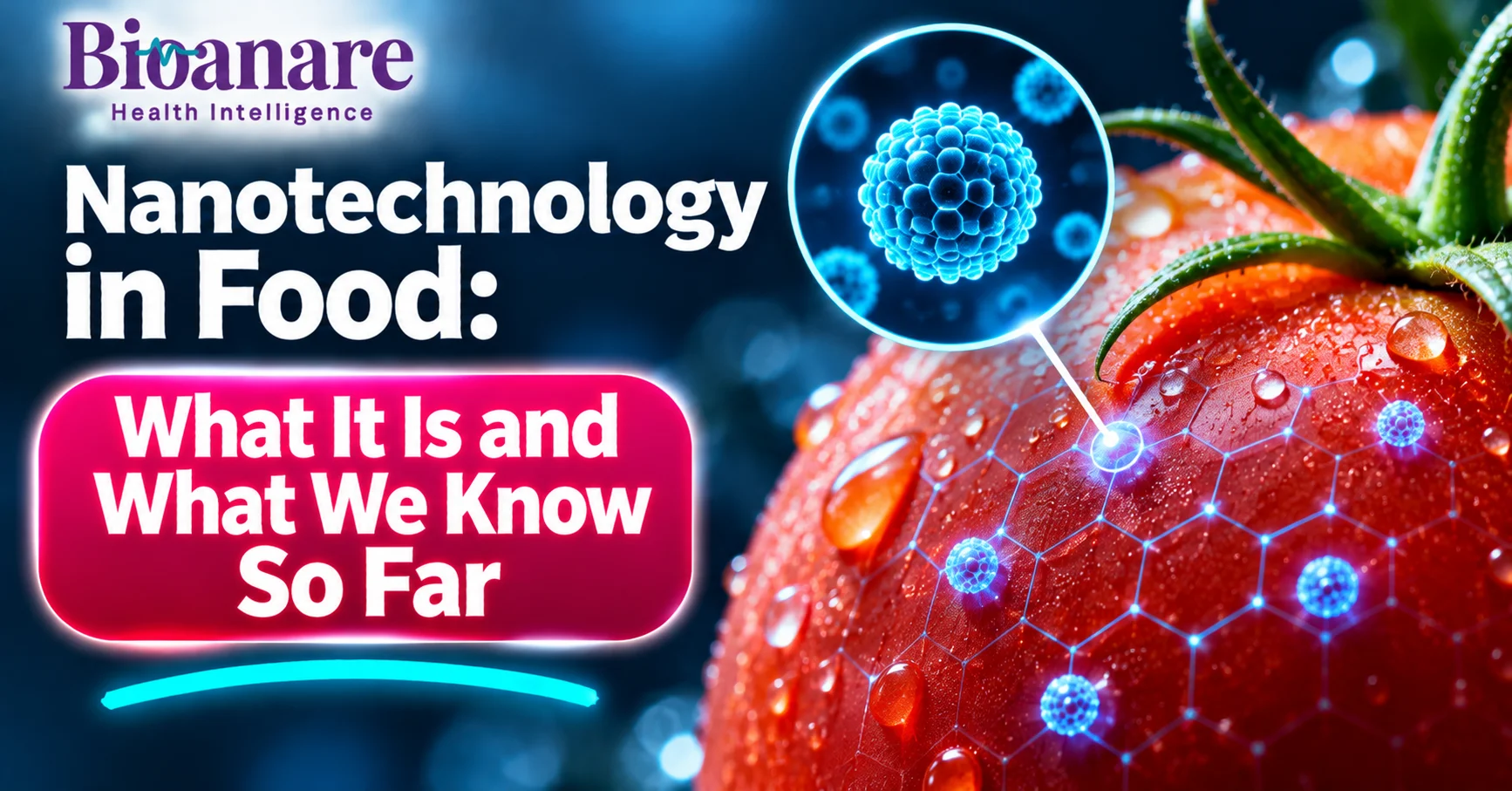
Nanotechnology involves the manipulation of matter at the nanoscale — particles between 1 and 100 nanometers in size. For context, a human hair is roughly 80,000–100,000 nanometers wide. At the nano scale, the same materials can behave completely differently from their larger counterparts.
Food nanotechnology is already in use. And most consumers don't know it.
Upload your blood test to Bioanare — free 7-day trial, no credit card required
Where Nanotechnology Is Used in Food
Food packaging: Nano-silver (antibacterial), nano-clay barriers (extends shelf life by reducing oxygen permeation), nano-zinc oxide (antimicrobial). These are designed to be in the packaging, not the food — but migration of nanoparticles through packaging into food is documented.
Food additives: Titanium dioxide (E171) — used as a whitening agent in confectionery, chewing gum, and some dairy — is composed of nanoparticles. The EU banned it in food in 2022 citing genotoxicity concerns. It remains approved in the US.
Delivery systems: Nanoemulsions and nanoencapsulations are used to improve bioavailability of vitamins, flavors, and bioactive compounds in functional foods. Omega-3 fatty acids are increasingly delivered in nanoencapsulated form in fortified foods.
Pesticide delivery: Nano-sized pesticides are used in some agricultural applications — smaller particles penetrate plant tissue more effectively.
What Research Shows About Safety
The scientific community is split. The main concern is that nanoparticles can: - Cross biological barriers that larger particles cannot (gut lining, blood-brain barrier, placental barrier) - Accumulate in organs over time - Interact with cells at the DNA level
The European Food Safety Authority (EFSA) has called for mandatory labeling of nano-ingredients and ongoing safety monitoring. The US FDA has not mandated nano-specific labeling.
What You Can Do
- Avoid products with titanium dioxide (E171) where possible
- Choose minimally packaged food where you can
- Support mandatory nano-ingredient labeling in your country
- Stay informed — this is a rapidly evolving field
Bioanare provides educational health information only. This is not a medical diagnosis. Always consult a qualified healthcare professional before making any health decisions.
← Back to all articles