
Which Vitamins You Cannot Take Together — And Which Ones Need Each Other
You've bought a carefully selected collection of supplements. You take them all at once every morning with your coffee. And you wonder why some of them don't seem to be doing much.
The problem may not be the supplements — it's the timing.
Upload your blood test to Bioanare — free 7-day trial, no credit card required
Vitamins and Minerals That Compete With Each Other
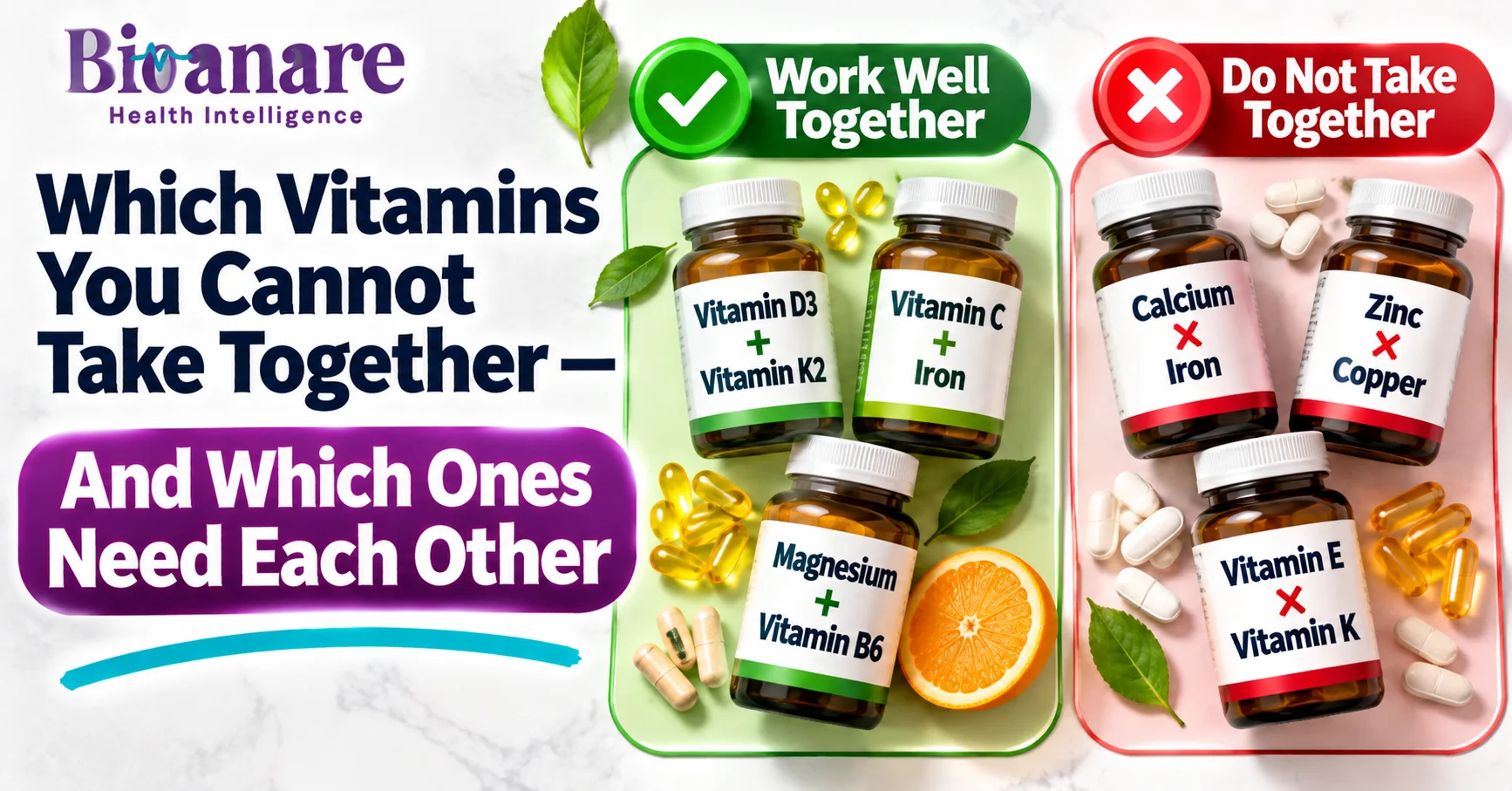
Iron vs. Calcium: Calcium significantly inhibits non-heme iron absorption. Take iron supplements and calcium at least 2 hours apart. Never take them together.
Iron vs. Zinc: High-dose iron and zinc compete for the same absorption pathway. If supplementing both, separate by at least 1–2 hours.
Zinc vs. Copper: High zinc intake depletes copper. If taking zinc long-term (over 50 mg/day), copper supplementation is typically needed.
Vitamin D vs. Vitamin K2 — Not Competing, but Linked: Vitamin D increases calcium absorption. Without adequate vitamin K2, that calcium may deposit in arteries rather than bones. If supplementing with high-dose vitamin D3, K2 (MK-7 form) is typically recommended alongside it.
Fat-soluble vitamins (A, D, E, K) taken together at very high doses: At extremely high supplementation levels, they can compete for absorption. At normal dietary supplement doses, this is not clinically significant for most people.
Magnesium vs. Calcium at High Doses: Compete for absorption when taken simultaneously in high amounts.
Supplements That Work Better Together (Synergistic Pairs)
| Take Together | Why |
|---|---|
| Iron + Vitamin C | Vitamin C converts iron to a more absorbable form, increasing absorption by up to 67% |
| Vitamin D3 + K2 | D3 increases calcium absorption; K2 directs it to bones not arteries |
| Zinc + B6 | Both involved in hundreds of enzyme reactions; often deficient together |
| Magnesium + Vitamin D | Magnesium activates vitamin D; without adequate magnesium, vitamin D supplementation is less effective |
| B12 + Folate | Work together in DNA synthesis and methylation; deficiency in one can mask the other |
Timing Matters Too
- Fat-soluble vitamins (A, D, E, K): Take with a meal containing fat
- Water-soluble vitamins (C, B vitamins): Can be taken any time but food reduces nausea
- Iron: Best absorbed on an empty stomach with vitamin C; take 2 hours apart from dairy, coffee, and antacids
- Magnesium: Often best taken in the evening (may promote sleep)
- Zinc: With food to avoid nausea; not with high-fiber meals (phytates reduce absorption)
Bioanare provides educational health information only. This is not a medical diagnosis. Always consult a qualified healthcare professional before making any health decisions.
← Back to all articles