
What Color Should an Egg Yolk Actually Be?
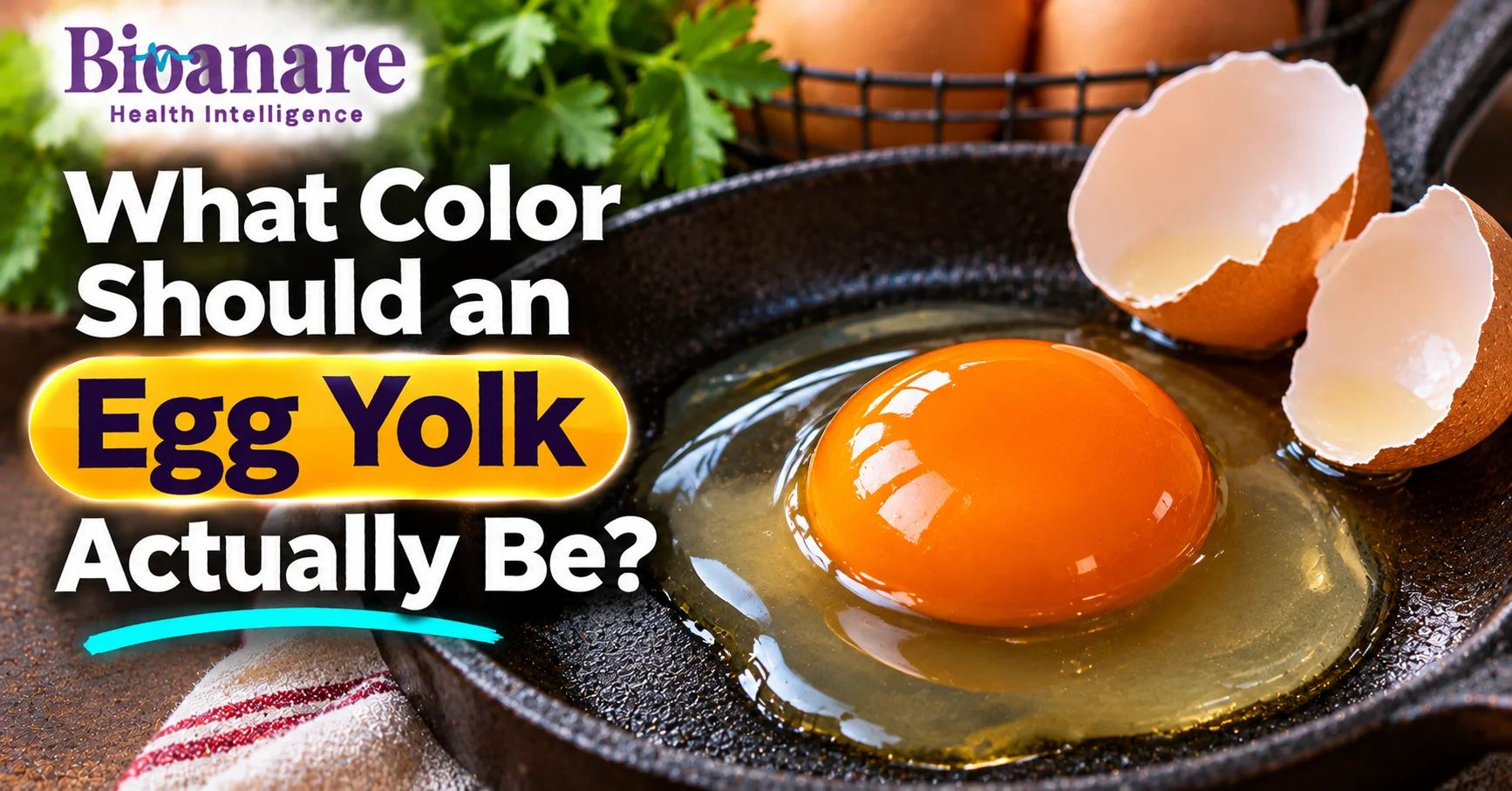
You crack two eggs from different sources side by side. One yolk is pale yellow — almost cream. The other is deep, vibrant orange. Same egg, different chicken, different life, different nutrition.
The color is not cosmetic. It's information.
Upload your blood test to Bioanare — free 7-day trial, no credit card required
Why Yolk Color Varies
Yolk color comes from carotenoids — pigments in the feed that the hen cannot synthesize herself and must get from her diet. The same pigments that make carrots orange, marigolds yellow, and autumn leaves red.
Pale yellow yolk: Hen was fed primarily on corn-based commercial feed with minimal carotenoid content. Standard industrial poultry feed. Nutritionally adequate for the hen's production but not rich in the pigments that reflect a natural, varied diet.
Medium yellow yolk: Hen had some access to grass or supplemented feed. Better, but still not the richest source.
Deep orange yolk: Hen had access to grass, insects, and naturally carotenoid-rich foods — pumpkin, marigold petals, fresh greens, varied grain. This is what a chicken's natural diet looks like. This is what a healthy egg yolk should look like.
Does Color Actually Mean Better Nutrition?
Research comparing pastured egg yolks (deep orange) to conventional egg yolks (pale yellow) consistently shows: - 2× more Vitamin E in pastured eggs - 3× more Vitamin A (beta-carotene) - 2–3× more Omega-3 fatty acids - More Vitamin D (from sunlight exposure) - Higher levels of carotenoids (lutein, zeaxanthin — important for eye health)
The Industrial Shortcut
The food industry knows consumers associate deep yellow-orange yolks with quality. So some producers add paprika extract, marigold extract, or synthetic pigments (canthaxanthin) to commercial feed to deepen yolk color artificially — without any change in the hen's living conditions or nutritional quality.
The EU permits marigold extract and paprika to deepen yolk color; canthaxanthin is permitted at limited levels. The US has similar provisions.
A deep orange yolk from a pastured hen and a deep orange yolk from a hen on artificially pigmented feed can look identical. The difference is in the nutrition and in the hen's life.
How to Find Genuinely Good Eggs
- Pasture Raised (see article on chicken labels) — most reliable label for genuine outdoor access
- Local farm eggs from chickens you've seen running around
- Eggs where the farmer can describe what their hens eat
Crack the egg and look. A naturally rich orange yolk is the product of real sunlight, real soil, real bugs, and real food. It's worth finding.
Bioanare provides educational health information only. This is not a medical diagnosis. Always consult a qualified healthcare professional before making any health decisions.
← Back to all articles