
What Do PLU Numbers on Fruit and Vegetables Really Mean?
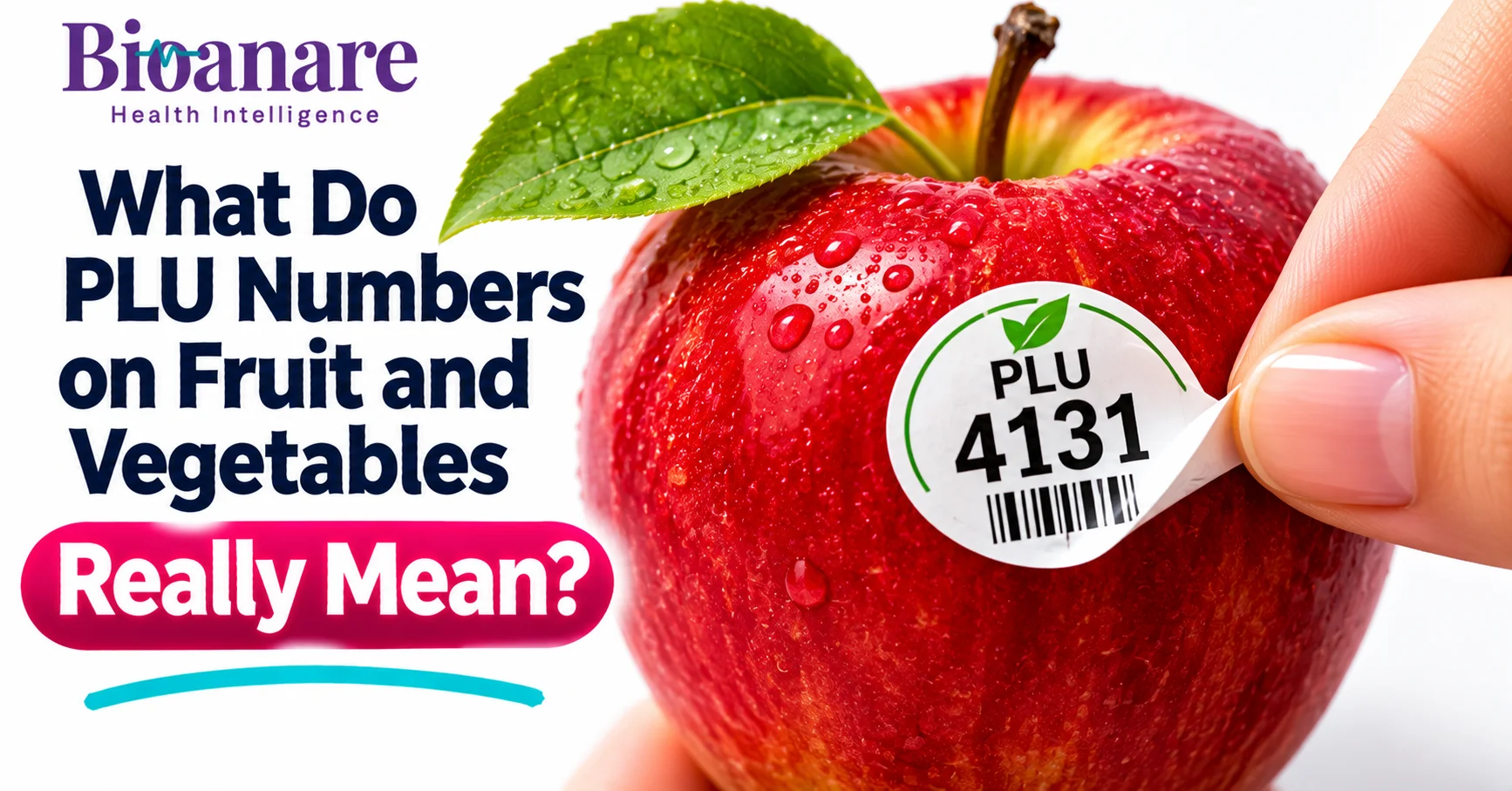
Look at the small white sticker on your apple or banana. There's a 4- or 5-digit number on it — the PLU code (Price Look-Up code). Most people assume it's just for the checkout register. It's actually telling you something about how that food was grown.
Upload your blood test to Bioanare — free 7-day trial, no credit card required
How PLU Codes Work
4-digit code (e.g. 4011 for bananas): Conventionally grown. Standard farming practices, which may include synthetic pesticides and fertilizers.
5-digit code starting with 9 (e.g. 94011): Certified organic. Grown without synthetic pesticides, synthetic fertilizers, or GMOs. The 9 at the beginning is the organic marker.
5-digit code starting with 8 (e.g. 84011): GMO (genetically modified). This coding system was established by the International Federation for Produce Standards.
The GMO Label — What You Should Know
In practice, the 8-prefix for GMO produce is rarely used. GMO produce companies have not been required to label their products with the 8-prefix in most countries, and many choose not to — even where GMO crops are grown.
This means you cannot rely on the absence of an 8-prefix to confirm food is non-GMO. The 9-prefix organic label is more reliable — certified organic standards prohibit GMO crops.
What to Do With This Information
- Look for the 9-prefix if you want certified organic
- Use non-GMO verified labels or certified organic for the highest confidence
- The "Dirty Dozen" list (annually published by the Environmental Working Group) identifies conventionally grown produce with the highest pesticide residues
Bioanare provides educational health information only. This is not a medical diagnosis. Always consult a qualified healthcare professional before making any health decisions.
← Back to all articles