
What Does High LDL Mean?
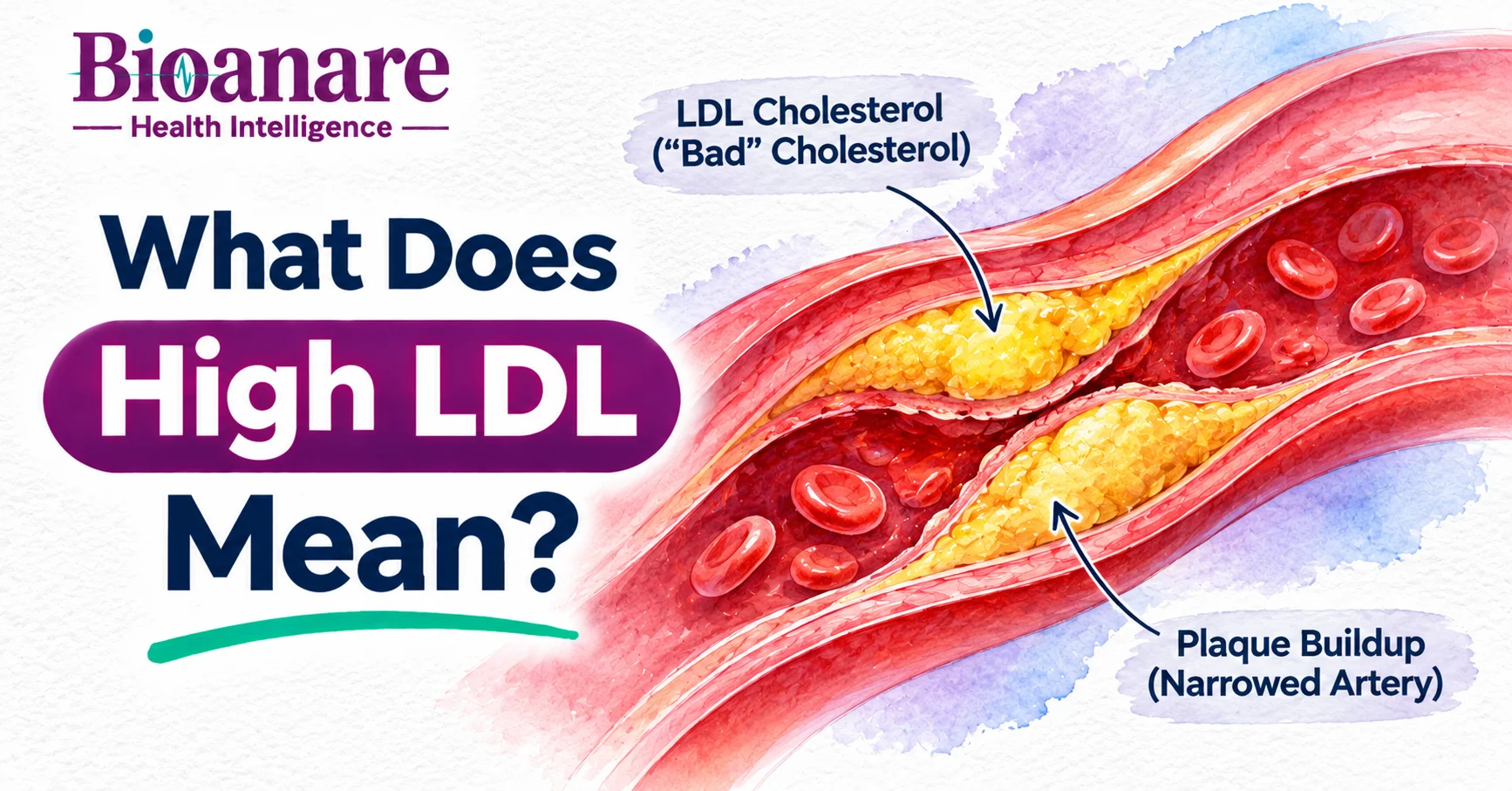
LDL (low-density lipoprotein) is often called "bad cholesterol" — but that label is an oversimplification. LDL carries cholesterol to your cells. The problem arises when there's too much of it, especially certain types, and it starts depositing in artery walls.
Upload your blood test to Bioanare — free 7-day trial, no credit card required
LDL Reference Ranges
- Optimal: below 100 mg/dL
- Near optimal: 100–129 mg/dL
- Borderline high: 130–159 mg/dL
- High: 160–189 mg/dL
- Very high: 190 mg/dL and above
Not All LDL Is Equal
Research increasingly shows that LDL particle size matters. Small, dense LDL particles are more likely to penetrate artery walls and cause damage than large, fluffy LDL particles — even at the same total LDL number. Standard cholesterol panels don't measure this, but advanced lipid tests can.
What Raises LDL?
- Saturated fats: butter, fatty beef, palm oil, coconut oil in excess
- Trans fats: still present in some processed foods
- Genetic hypercholesterolemia: inherited high LDL regardless of diet
- Hypothyroidism: commonly causes elevated LDL — always test thyroid if cholesterol is high
- Kidney disease
- Sedentary lifestyle
Lowering LDL
- Increase soluble fiber: oats, beans, lentils, apples, psyllium
- Replace saturated fat with monounsaturated fat (olive oil)
- Regular aerobic exercise
- Address underlying conditions (thyroid, diabetes)
- Statins if cardiovascular risk is high
Bioanare provides educational health information only. This is not a medical diagnosis. Always consult a qualified healthcare professional before making any health decisions.
← Back to all articles