
What Does High TSH Mean? Understanding Your Thyroid Results
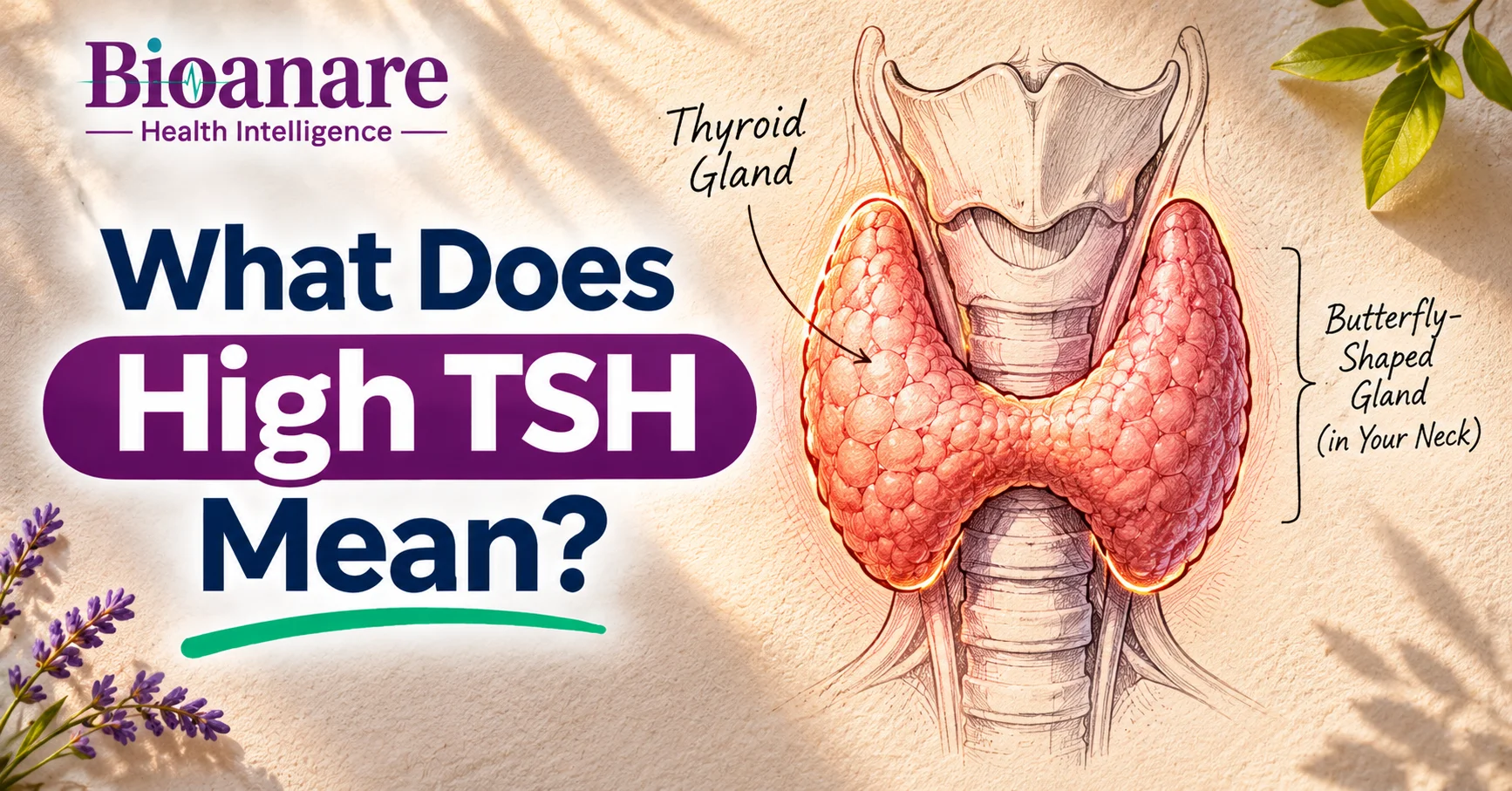
If your thyroid test came back with a high TSH, the most likely explanation is a mildly underactive thyroid. But the number alone doesn't tell the whole story, and a single raised reading isn't always cause for treatment. Here's what TSH measures, why it rises, and what usually happens next.
Upload your blood test to Bioanare — free 7-day trial, no credit card required
What is TSH?
TSH stands for thyroid-stimulating hormone. Despite the name, it isn't made by the thyroid — it's made by the pituitary gland in your brain, which uses it to tell the thyroid how much thyroid hormone to produce. The relationship works like a thermostat: when thyroid hormone levels in the blood fall, the pituitary releases more TSH to push the thyroid to work harder.
This is the counterintuitive part: a high TSH usually means an underactive thyroid. The pituitary is shouting louder because the thyroid isn't responding adequately. A low TSH, conversely, often points to an overactive thyroid.
Typical TSH ranges
A common reference range is roughly 0.4–4.0 mIU/L, though labs differ and the range shifts in pregnancy and with age. A result modestly above the top of the range, with normal thyroid hormone (free T4), is often called "subclinical hypothyroidism." A clearly high TSH with a low free T4 indicates overt hypothyroidism.
Common causes of a high TSH
- Hashimoto's thyroiditis. An autoimmune condition in which the immune system gradually reduces thyroid function. It's the most common cause of a persistently high TSH in many countries.
- Iodine deficiency. Iodine is a building block of thyroid hormone; too little can raise TSH.
- Recovery from illness. TSH can rebound upward temporarily after a non-thyroid illness.
- Certain medications. Lithium and amiodarone, among others, can affect thyroid function.
- Thyroid surgery or radioactive iodine treatment. These reduce the amount of functioning thyroid tissue.
- Under-treatment on thyroid medication. In people already taking levothyroxine, a high TSH often simply means the dose needs adjusting.
Symptoms that may accompany a high TSH
When the thyroid is underactive, the whole body slows down. People may notice fatigue, weight gain, feeling cold, dry skin, constipation, low mood, brain fog, or heavier periods. Symptoms tend to be vague and develop slowly, which is why hypothyroidism is often picked up on a blood test before the person connects the dots.
What happens next?
A single high TSH is usually repeated, often with free T4 and thyroid antibodies (to check for Hashimoto's), after a few weeks — both because TSH fluctuates and because a temporary illness can distort it. If the thyroid is clearly underactive, treatment with levothyroxine (a replacement thyroid hormone) is simple and effective, with the dose fine-tuned using follow-up TSH tests. Subclinical cases are sometimes monitored rather than treated immediately, depending on symptoms, antibody status, and individual circumstances.
Read your thyroid results in context
TSH makes the most sense alongside free T4, thyroid antibodies, and your symptoms. Bioanare pulls these together and explains, in plain language, what your thyroid results suggest and what's worth discussing with your doctor.
Bioanare provides educational health information only. This is not a medical diagnosis. Always consult a qualified healthcare professional before making any health decisions.
← Back to all articles