
What Does Low Iodine Mean?
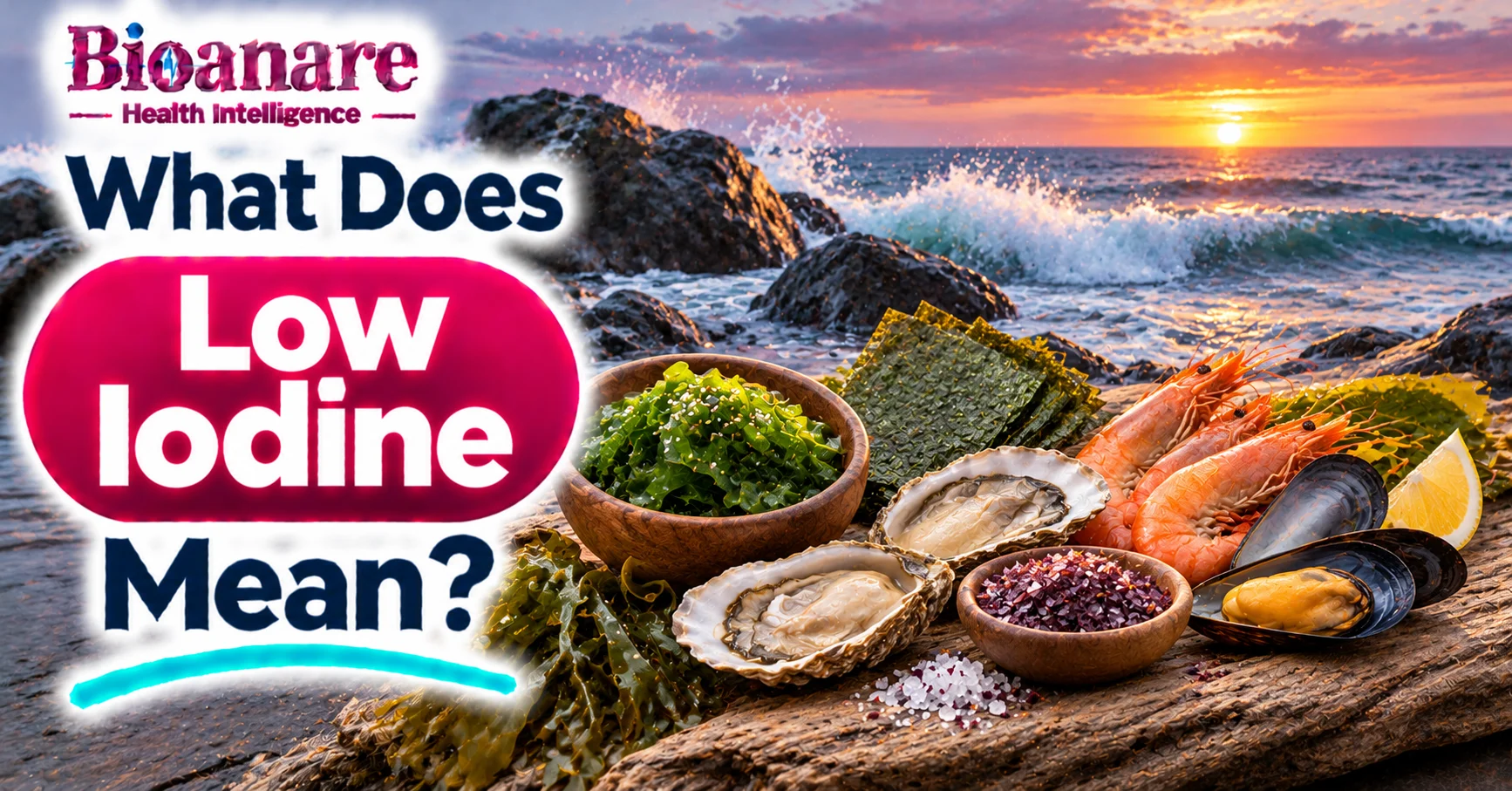
Iodine is the raw material the thyroid uses to make T3 and T4. Without enough iodine, the thyroid can't produce sufficient hormone — leading to goiter, hypothyroidism, and in pregnancy, developmental problems in the baby.
Upload your blood test to Bioanare — free 7-day trial, no credit card required
Iodine Deficiency — Still Common
Despite iodized salt programs, iodine deficiency remains a global concern. Rising popularity of non-iodized specialty salts (sea salt, Himalayan salt) and reduced dairy consumption have increased deficiency rates in many Western countries.
Signs of Iodine Deficiency
- Goiter — enlarged thyroid gland (the thyroid grows to try to capture more iodine)
- Hypothyroidism symptoms: fatigue, weight gain, cold sensitivity, constipation, dry skin
- In pregnancy: increased miscarriage risk, infant brain development problems
- Fibrocystic breast changes (controversial, but some evidence)
Who Is at Risk?
- People avoiding iodized salt (using sea salt, Himalayan salt exclusively)
- Vegans and vegetarians (main sources are dairy and seafood)
- Pregnant and breastfeeding women (requirements increase significantly)
- People in iodine-deficient regions
Testing for Iodine Deficiency
Urine iodine concentration is the standard test — not blood. A 24-hour urine iodine is most accurate; a spot urine iodine-to-creatinine ratio is more practical.
Best Sources
Seaweed (especially nori, wakame), fish and seafood, dairy products, iodized salt, eggs.
Bioanare provides educational health information only. This is not a medical diagnosis. Always consult a qualified healthcare professional before making any health decisions.
← Back to all articles