
What Does Low Selenium Mean?
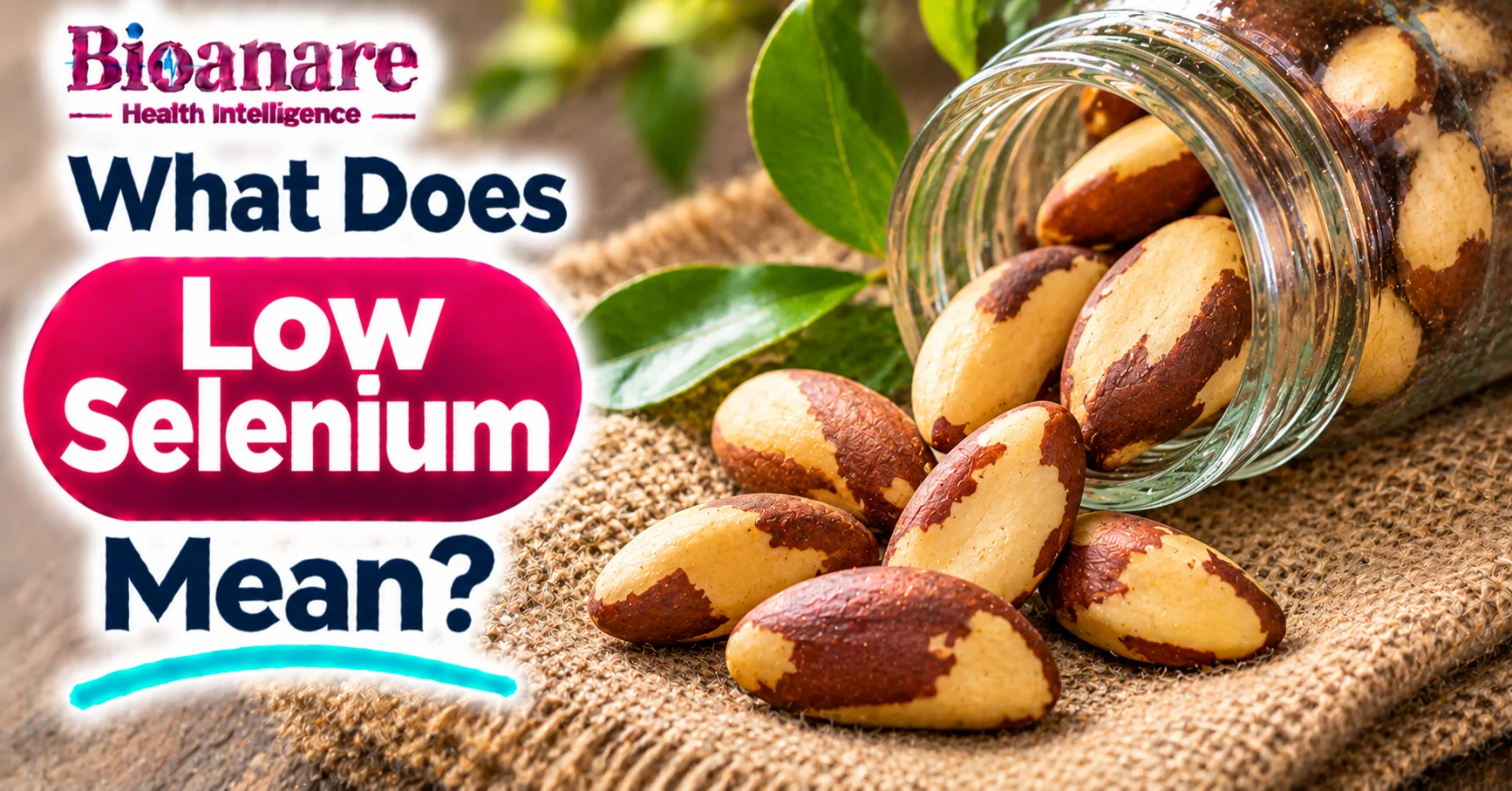
Selenium is a trace mineral that acts as a powerful antioxidant, supports thyroid hormone conversion, and is essential for immune function and reproductive health.
Upload your blood test to Bioanare — free 7-day trial, no credit card required
Why Selenium Is Underestimated
Most people don't think about selenium, yet selenium deficiency is widespread in regions with selenium-poor soil — including parts of Europe, New Zealand, and China. The thyroid is particularly dependent on selenium — it contains more selenium per gram than any other organ.
Signs of Low Selenium
- Thyroid problems (impaired T4 to T3 conversion)
- Elevated anti-TPO antibodies (Hashimoto's connection — selenium helps protect the thyroid from immune attack)
- Weakened immune system
- Infertility in men (selenium is concentrated in sperm)
- Fatigue and muscle weakness
- Cognitive decline
- Slow wound healing
Causes of Deficiency
- Low selenium soil content in region
- Vegan/vegetarian diet without supplementation
- Gut malabsorption
- Kidney dialysis (selenium is lost in dialysis)
Best Sources
Brazil nuts — just 1–2 per day provides the daily requirement. Also: tuna, sardines, shrimp, organ meats, chicken, eggs.
Note on Toxicity
Unlike most minerals, selenium has a narrow safe range. Very high intake causes selenosis — hair loss, nail brittleness, garlic breath, nausea. Don't take more than 200–400 mcg/day from supplements.
Bioanare provides educational health information only. This is not a medical diagnosis. Always consult a qualified healthcare professional before making any health decisions.
← Back to all articles