
What Does Low Zinc Mean?
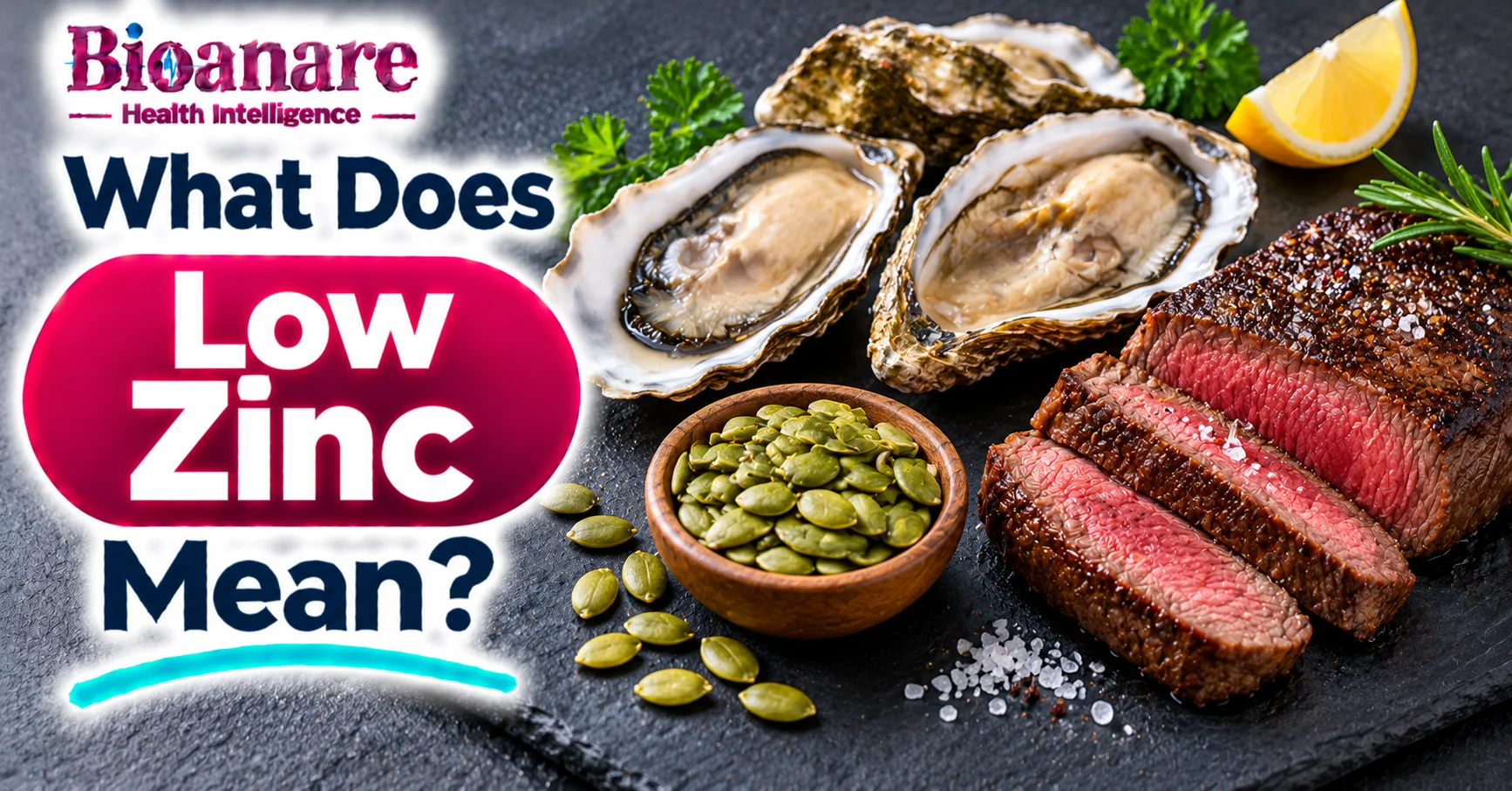
Zinc is involved in over 300 enzymatic reactions and is essential for immune function, protein synthesis, wound healing, DNA synthesis, and cell division. It's the second most abundant trace mineral in the body after iron.
Upload your blood test to Bioanare — free 7-day trial, no credit card required
Signs of Zinc Deficiency
- Frequent infections, slow immune response
- Slow wound healing
- Loss of taste or smell
- Hair loss
- Poor skin health, acne, dermatitis
- Low appetite
- Impaired growth (in children)
- Reproductive issues — low testosterone in men, irregular periods in women
- White spots on nails (commonly attributed to zinc, though not always caused by it)
Who Is at Risk?
- Vegetarians and vegans (plant sources have lower bioavailability due to phytates)
- Elderly people
- Those with Crohn's disease, celiac, or IBD
- Chronic alcohol users
- Pregnant or breastfeeding women
- People with sickle cell disease
Best Food Sources
Oysters (the highest source by far), red meat, shellfish, pumpkin seeds, hemp seeds, lentils, chickpeas, cashews, dairy.
Zinc Testing
Blood zinc isn't always reliable — only about 0.1% of body zinc is in blood. Symptoms and dietary assessment are often more informative. Plasma zinc is preferred over serum zinc.
Bioanare provides educational health information only. This is not a medical diagnosis. Always consult a qualified healthcare professional before making any health decisions.
← Back to all articles