
What Does "Reference Range" Mean in Blood Tests?
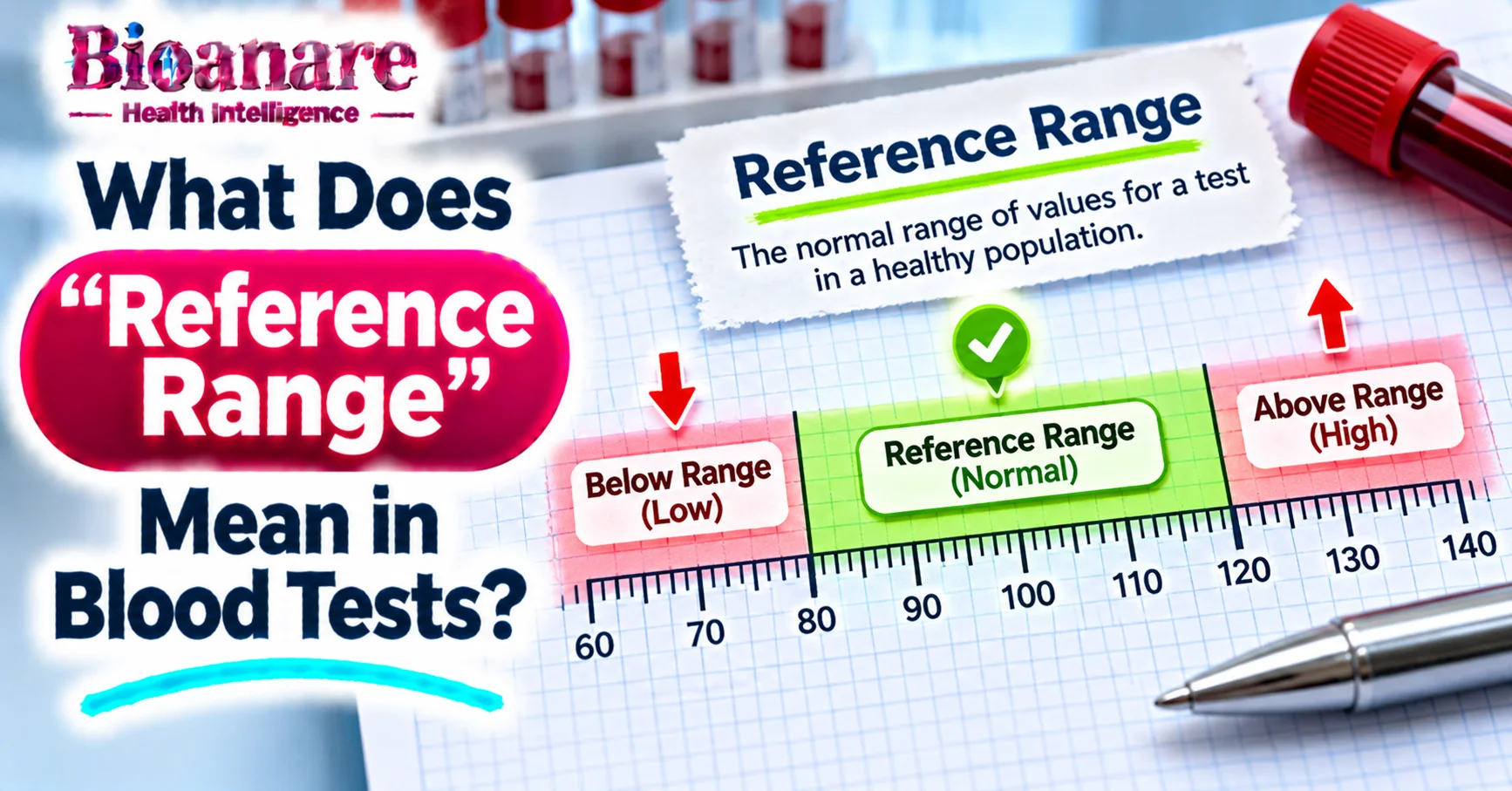
Every result on your blood test printout comes with a reference range — the numbers in brackets that say what's considered normal. But where do these ranges come from, and how reliable are they?
Upload your blood test to Bioanare — free 7-day trial, no credit card required
How Reference Ranges Are Calculated
Reference ranges are determined by testing a large population of apparently healthy people and calculating the range that covers the middle 95%. This means 5% of perfectly healthy people will have results outside the reference range on any given test.
If you run 20 blood tests, statistically one result will fall outside the range by chance alone — even if you're completely healthy.
Why "Normal" Doesn't Always Mean "Optimal"
Reference ranges reflect the average population — which includes people with undiagnosed subclinical disease, people with poor nutrition, sedentary people, and older people. "Within range" means you're in the middle 95% of the tested population. It doesn't mean your level is ideal for your health.
Example: Vitamin D reference range often starts at 20 ng/mL. Many researchers and clinicians consider 40–60 ng/mL optimal. You can be "in range" and still functionally deficient.
Reference Ranges Vary Between Labs
Different laboratories use different equipment and methods, so ranges differ slightly. Always use the reference range from your own lab report, not a number you read online.
Trending Matters More Than Single Values
A result at the top of "normal" that was previously mid-range may be more significant than a result slightly outside range that has been there for years.
Bioanare provides educational health information only. This is not a medical diagnosis. Always consult a qualified healthcare professional before making any health decisions.
← Back to all articles