
Why Families Choose Fast Food Over Home-Cooked Meals — And What It's Costing Them
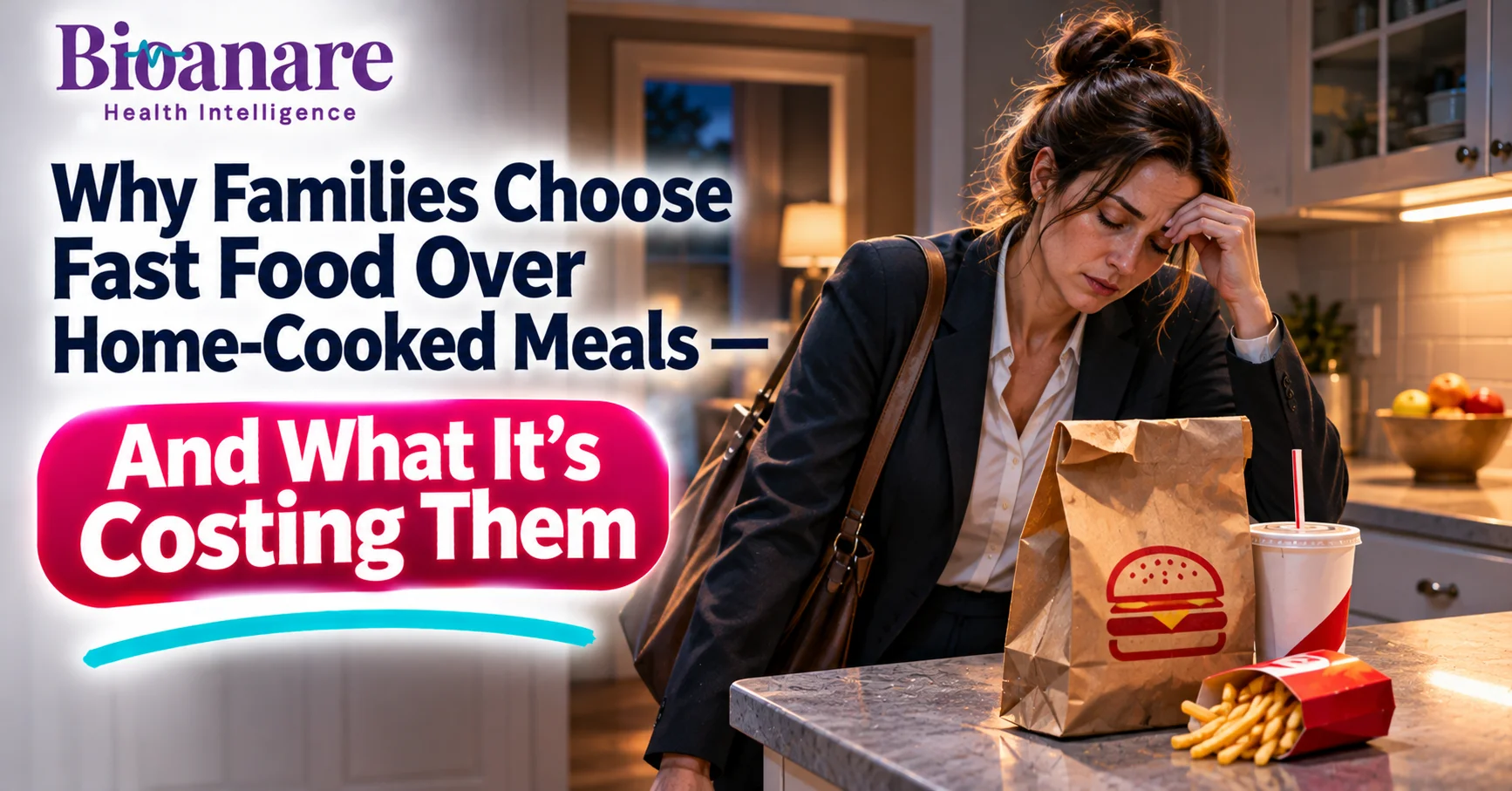
Here's a scenario that plays out millions of times each day: Two parents work full days. They leave the office exhausted. The kids have after-school activities until 6pm. Someone has to make dinner by 7pm or the whole evening unravels. The drive-through takes eight minutes.
Fast food didn't win on taste. It won on logistics.
Upload your blood test to Bioanare — free 7-day trial, no credit card required
The Real Reasons Fast Food Became the Default
Time poverty. The average North American adult works longer hours than any point in the past 30 years, while also managing more administrative life tasks (insurance, school administration, digital everything) than previous generations. Cooking from scratch requires 45–90 minutes most people don't have on a weekday.
Price perception. A family of four at a fast food restaurant can cost $30–40. The equivalent home-cooked meal with fresh ingredients might cost $20–25 — but requires planning, shopping, and time. When you factor in the value of an hour of a parent's time, the perceived cost of cooking rises significantly.
Food environment design. Fast food restaurants are strategically clustered near schools, transit stops, and commuting routes. The food is engineered for palatability — salt, fat, and sugar in precise combinations that trigger dopamine release and reduce satiety signals. Children who grow up eating it develop taste preferences calibrated to that level of stimulation.
Exhaustion. Decision fatigue is real. After hundreds of decisions at work, the cognitive load of planning, shopping for, and cooking a meal is genuinely difficult for many people on weekday evenings.
What It's Costing
Regular fast food consumption is associated with higher rates of obesity, type 2 diabetes, cardiovascular disease, and non-alcoholic fatty liver disease. Children who eat fast food more than 3 times per week have significantly higher rates of obesity and are more likely to continue the pattern into adulthood.
The economic cost of diet-related chronic disease in Canada and the US runs into hundreds of billions of dollars annually — the actual cost of fast food convenience, deferred by years.
Practical Alternatives That Actually Work
- Batch cooking on Sundays (2 hours = 4–5 easy meals)
- Rotation of 7–10 quick recipes that everyone eats (20–30 minutes each)
- Semi-prepared ingredients: pre-cut vegetables, canned legumes, rotisserie chicken
- Reframing: "fast food at home" — eggs, rice, vegetables = 15 minutes
Bioanare provides educational health information only. This is not a medical diagnosis. Always consult a qualified healthcare professional before making any health decisions.
← Back to all articles